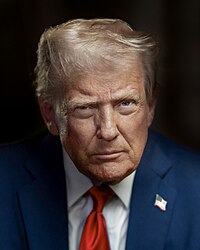
President Trump's announcement of a two-week suspension of Iranian strikes in exchange for immediate Strait of Hormuz access represents the dominant market-moving signal of April 7, 2026. The agreement triggered synchronized risk-asset acceleration across emerging markets (Nikkei +1.84%, CSI 300 +1.54%, SENSEX +1.20%, Bovespa +1.12%), currency weakness in safe havens (dollar depreciation documented by Investing.com), and crude oil dives of 18% as supply-chain anxiety recedes. This binary outcome—which LeadersCartel scored as a 0.75 volatility event—has temporarily resolved the 'Trump Iran deadline' bond market crisis signal, shifting institutional positioning from hedging into growth equities. However, the agreement's fragility (two-week window only) maintains elevated tail-risk pricing in fixed income, as JPMorgan's binary escalation hedging strategies remain active contingencies.
The ceasefire framework draws critical legitimacy from Pakistan's diplomatic hosting role, with Islamabad declaring two-day government holidays ahead of formal negotiations (0.75 emergence signal). This positioning elevates Pakistan as the de facto neutral arbiter in US-Iran negotiations—a geopolitical upgrade that carries implications for Kashmir-adjacent security architecture and China's Belt and Road influence in South Asia. Simultaneously, Delhi police arrests of suspected terror operatives (0.90 signal score) suggest that South Asian security establishments perceive the ceasefire as temporary, maintaining elevated counter-terrorism postures. The juxtaposition of diplomatic celebration and arrest operations reveals the confidence gap: governments are hedging the peace framework while publicly endorsing it.
The humanitarian cost of the preceding escalation cycle is now quantified in Beirut's hospital system collapse (0.98 signal score), where Israeli strikes have produced overwhelmed medical infrastructure and casualty scenes described by survivors as 'carnage.' This represents the highest human cost signaled in today's terminal data, yet paradoxically has been displaced in market narratives by the ceasefire agreement. The Vatican's escalation of ecclesiastical pressure through Pope Leo XIV's ceasefire calls (0.98 signal) indicates that faith-based institutions view the conflict as having crossed moral thresholds that ceasefire timelines alone cannot address. For capital markets, this signals emerging ESG-driven portfolio repositioning away from defense contractors with Israeli operations, particularly given the 523 arrests of UK Palestine Action protesters (0.91 signal)—indicating that domestic political pressure on allied governments is intensifying.
◈ THE POWER INDEX
Track every world leader, corporation and nation with live influence scores, signal history and network maps.
OPEN THE INDEX →
Free access · No sign-in required
India's escalation of diesel and jet fuel export duties from Rs 21.5/L to Rs 55.5/L (0.93 signal) introduces structural energy cost inflation that will persist regardless of the Iran ceasefire. This duty surge extends the global aviation crisis beyond geopolitical de-escalation, creating a supply-side shock in jet fuel costs that EIA forecasts will keep Brent crude elevated through Q2 2026 at $115/bbl peak pricing. For hedge fund capital allocation, this creates a bifurcated opportunity set: short-term crude call spreads are unwinding (explaining oil's 18% dive), but medium-term aviation fuel cost floors remain elevated. Cathay Pacific and regional carriers face margin compression that the ceasefire does not resolve. This signal (0.93) demonstrates that energy inflation has decoupled from geopolitical risk, embedding structural cost increases in transportation and logistics sectors.
Counter-terrorism escalations in Istanbul (16 detainees in Beşiktaş terror investigation, 0.69 emergence signal) and South Asia (Delhi arrests, 0.90 signal) indicate that militant networks are operating independent of state-level ceasefire agreements. The simultaneity of these arrests across Turkey and India suggests coordinated or opportunistic counter-terrorism operations timed to the ceasefire window—law enforcement is moving while diplomatic attention is concentrated on negotiations. For capital markets, this maintains elevated volatility premia in aviation, hospitality, and tourism equities in affected regions. The Turkey signal is particularly significant given NATO's Article 5 implications; any escalation in Istanbul terror attacks could trigger alliance-wide security posturing that would reverse today's risk-on momentum.
The Trump administration's simultaneous announcement of the Washington Arch 'One Nation Under God' infrastructure project (0.98 signal score, scored alongside Benjamin Netanyahu and Iran entities) signals ideological consolidation at the domestic level during foreign policy de-escalation. This juxtaposition suggests a strategic pivot: aggressive domestic identity politics messaging paired with international restraint signaling. The monument project implies sustained defense spending and construction sector stimulus, creating a medium-term positive bias for US equities despite the market's initial -0.56% Dow decline (likely driven by crude oil re-pricing and rotation into international growth). Bitcoin's -2.65% decline correlates with the dollar weakness from the ceasefire news, as risk-off positioning unwinds.
The UK migration crisis signal (Sudan-linked Channel crossing deaths, 0.98 score) appears tangential to Iran ceasefire developments but carries geopolitical significance: it demonstrates that regional conflicts (Yemen, Ethiopia, Sudan) are driving secondary humanitarian crises and migration pressures in allied nations. This compounds the Palestine Action arrest signal (523 detainees, 0.91 score), suggesting that Western democracies face internal pressure from constituencies opposed to Middle East military operations. For political risk analysis, this signals that Democratic allies (UK, France, Australia per the Greens' escalation call at 0.69 signal) face domestic dissent that could constrain future military commitments to Israel or US-led operations. This represents a structural constraint on geopolitical flexibility not priced into current risk models.
Putin's Easter service attendance at Cathedral of Christ Savior (0.98 signal score, explicitly linked to Trump and Strait of Hormuz entities) must be read as Russia's repositioning during the ceasefire period. The Orthodox religious symbolism messaging—documented as soft power consolidation—indicates that Moscow is framing the Trump-Iran agreement within a multipolar great-power realignment narrative. Russia's absence from ceasefire negotiations (Pakistan-hosted talks involve US, Iran, and UN actors) suggests Moscow is content to observe and position itself as guardian of the Eastern Orthodox world order rather than direct negotiator. For capital flows, this maintains elevated geopolitical risk premia in Eastern European equities and NATO-aligned markets, as Russia's quiet posturing during ceasefires historically precedes its own regional initiatives. This is a yellow signal for medium-term volatility in Ukraine-adjacent markets.