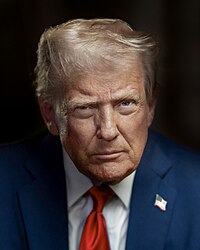
Iran fired on a third vessel in the Strait of Hormuz as the Trump administration extended a ceasefire deadline past Sunday, according to reports tracked in the terminal. The incident marks an escalation in an already volatile corridor through which roughly one-third of global maritime oil traffic passes. A US Navy blockade remains active in the region as diplomatic channels attempt to manage the standoff.
Brent crude exceeded $100 per barrel following the attack, a threshold that signals broader investor concern about sustained supply disruptions. The surge in oil prices coincides with warnings from the EU Energy Commissioner that the regional crisis will impact European energy costs for months or years. Emerging markets, including India and Indonesia, are positioned to benefit from higher commodity prices, though the terminal reports suggest this advantage is offset by broader economic uncertainty.
The escalation compounds existing NATO fragmentation documented in parallel intelligence. Hungary's earlier blockade of EU funding for Ukraine has been reversed following pressure from Brussels, enabling a €106 billion financing package to proceed. However, energy tensions between Hungary and the broader European alliance remain unresolved, with the Druzhba pipeline resumption between Russia and Germany signaling a partial normalization of Russian-European energy ties despite the geopolitical friction.
India's institutional investors have responded by spiking purchases of 30-year sovereign bonds, a move consistent with hedging against extended Middle East conflict. South Korea's foreign exchange deposits meanwhile have declined at record pace as the weakening won triggers currency conversions among investors seeking safe assets. These flows suggest that capital markets are pricing in a prolonged regional crisis rather than a near-term resolution.
The Trump administration has framed the ceasefire extension as a 'delicate balance' with Iran, language that echoes concurrent efforts to manage US-China semiconductor decoupling. Commerce Secretary Lutnick reported that China purchased zero advanced H200 chips in recent periods, indicating that US export controls on critical technology are taking effect. The parallel crises—one military, one technological—are straining US diplomatic and economic capacity simultaneously.
US equity markets rose 1.05 percent on the S&P 500 and 1.64 percent on the NASDAQ despite the oil shock, driven partly by strong corporate earnings and a separate announcement that Tesla is increasing capital expenditure to $25 billion for artificial intelligence and robotics initiatives. Uranium prices surged 7.42 percent, reflecting investor expectations of sustained energy demand amid supply constraints. European markets declined, with the CAC 40 down 0.96 percent and the Hang Seng down 0.91 percent, suggesting a geographic split in risk appetite.
⬡ RAVEN OUTLOOK — NEXT 48-72 HOURS
What to watch: (1) Whether Trump extends the Hormuz ceasefire beyond the current Sunday deadline or permits military escalation, with oil price implications for Q2 2026 earnings. (2) The outcome of the Cyprus summit on EU-Turkey relations, scheduled in the coming weeks, as energy tensions may worsen existing NATO coordination gaps. (3) India's bond purchasing patterns through May, as sustained hedging activity may signal that institutional investors expect Middle East instability to persist beyond Q2.