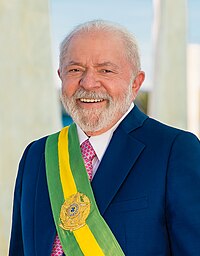
Luiz Inácio Lula da Silva
INTELLIGENCE DOSSIER: LUIZ INÁCIO LULA DA SILVA
Luiz Inácio Lula da Silva is the current President of Brazil, the largest economy in Latin America and a permanent UN Security Council aspirant with 215 million citizens and significant global commodity influence. Lula returned to office in January 2023 after a prior presidency (2003–2010) and remains a pivotal figure in Brazilian left-wing politics and BRICS alignment. His strategic significance derives from Brazil's role as a swing actor between Western and non-Western blocs, its control over Amazon policy affecting global climate commitments, and his capacity to reshape regional trade architecture independent of US preferences.
On the LeadersCartel Power Index, Lula ranks 102 globally with a score of 3.7, placing him in the monitored tier with zero active high-impact signals, zero emerging signals, and zero watch-list entries currently tracked across available intelligence sources. This relatively mid-tier positioning reflects Brazil's secondary-power status despite economic scale; Lula's influence operates primarily at regional level rather than commanding immediate systemic leverage equivalent to Trump, Xi, or Modi. The monitored classification indicates steady-state observation rather than acute escalation risk.
Three concurrent signal developments warrant attention. First, Brazil's Senate approved legislation shortening the workweek to 40 hours, a legislative win Lula secured ahead of a runoff election, demonstrating retained domestic coalition capacity. Second, the workweek bill represents pre-runoff momentum-building, suggesting contested political terrain requiring active coalition management. Third, Lula publicly accused Meta (Facebook/Instagram parent) of algorithmic bias favoring his right-wing opponent, escalating technology-governance tensions and signaling concern over information asymmetry in Brazilian electoral dynamics.
Analysts should monitor whether Lula's Meta accusation triggers regulatory retaliation or investigation announcements within 72 hours, as this would indicate escalating tech-sector friction. The critical trigger event is the timing and margin of the runoff election result itself; a narrow victory would signal weakened mandate constraining his ability to pursue aggressive foreign policy repositioning or BRICS coordination, while a decisive win would restore room for geopolitical maneuver against Washington's preference.
No active signals currently tracked.