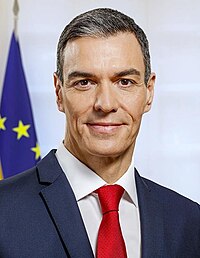
Pedro Sánchez
INTELLIGENCE DOSSIER: PEDRO SÁNCHEZ
Pedro Sánchez is the current Prime Minister of Spain, leading the Spanish government and holding substantial influence over European Union policy coordination and Mediterranean security affairs. As head of the Socialist Party of Spain (PSOE) and chief executive of a NATO member state with critical geopolitical positioning, Sánchez shapes European responses to migration, North African relations, and regional stability. Spain's strategic importance as a gateway between Europe and Africa, combined with its EU voting weight and NATO participation, makes Sánchez a consequential actor in transatlantic security architecture.
Sánchez maintains a monitored tier classification on the LeadersCartel Power Index at rank 183 with a composite score of 1.7, indicating moderate but declining international influence tracking. The signal distribution across zero high-impact, zero emerging, and zero watch category signals reflects a period of relative stability without major escalation events, though the monitored designation suggests elevated analytical attention. His position has contracted from higher-profile geopolitical moments, suggesting either consolidation of domestic control or reduced leverage in international negotiations relative to peer European leaders like Macron and Merz.
Three headline signals cluster around the Ceuta migrant crisis, revealing a critical week of Spanish-Moroccan tensions. Sánchez defended his government's handling of the Ceuta border surge while explicitly refusing attribution of Morocco's role in the breach, signaling diplomatic restraint despite operational failure. His second statement questioning Morocco's border control capacity during the migrant influx marked a subtle escalation, while his third signal asserting "no evidence whatsoever" of Moroccan involvement represented defensive messaging to domestic audiences and EU partners concerned about Mediterranean security protocols.
Analysts should monitor Spanish-Moroccan bilateral communications over the next 72 hours for either formal diplomatic incidents or de-escalation signals. The critical trigger event is whether Morocco responds to Sánchez's statements with countervailing pressure on the Tangier-Gibraltar corridor, potentially destabilizing a fragile regional equilibrium that affects EU border security.
No active signals currently tracked.