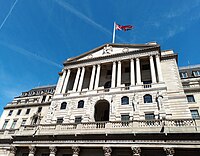
Bank of England
INTELLIGENCE DOSSIER: BANK OF ENGLAND
The Bank of England is the United Kingdom's central bank, operating under the authority of Prime Minister Keir Starmer's government and responsible for monetary policy, financial stability, and banking regulation across Britain's £3.1 trillion economy. As the world's oldest continuously operating central bank, the BoE functions as the lender of last resort and primary architect of UK interest rate policy, directly influencing capital flows, inflation trajectories, and economic competitiveness across European and transatlantic markets. Their decisions cascade through global financial systems, making sterling movements a critical macro indicator for institutional investors monitoring central bank divergence strategies.
The Bank of England currently ranks 216th on the LeadersCartel Power Index with a 1.6 score, tracked across nine active intelligence sources with signal distribution concentrated in one emerging indicator. The "monitored" tier classification reflects stable institutional positioning rather than declining influence; the single emerging signal suggests emerging market attention toward BoE policy transmission mechanisms. The absence of high-impact signals indicates the BoE operates within expected parameters, though their coordinated positioning with the International Monetary Fund warrants close observation given synchronized messaging on systemic risks.
Three concurrent developments demand immediate analysis. First, BoE and IMF leadership jointly issued warnings on cyber threats to financial system trust, signaling coordinated concern about digital infrastructure vulnerabilities ahead of potential rate-setting meetings. Second, Governor Bailey's recent commentary on fiscal policy effectiveness suggests growing tension between monetary and fiscal authorities—a critical faultline in post-inflationary policy coordination. Third, the BoE's announcement regarding UK banknote redesigns (featuring puffin, barn owl, hedgehog imagery) indicates parallel soft-power initiatives reinforcing sterling brand positioning amid currency competition with digital alternatives.
Monitor BoE communication regarding interest rate trajectory over the next 72 hours, particularly any statements addressing Trump administration fiscal stimulus effects on transatlantic inflation expectations. The critical trigger: any coordinated messaging shift between the BoE and ECB on currency stability would signal realignment of European-North American monetary policy consensus and warrant immediate elevation of the BoE's power index ranking.