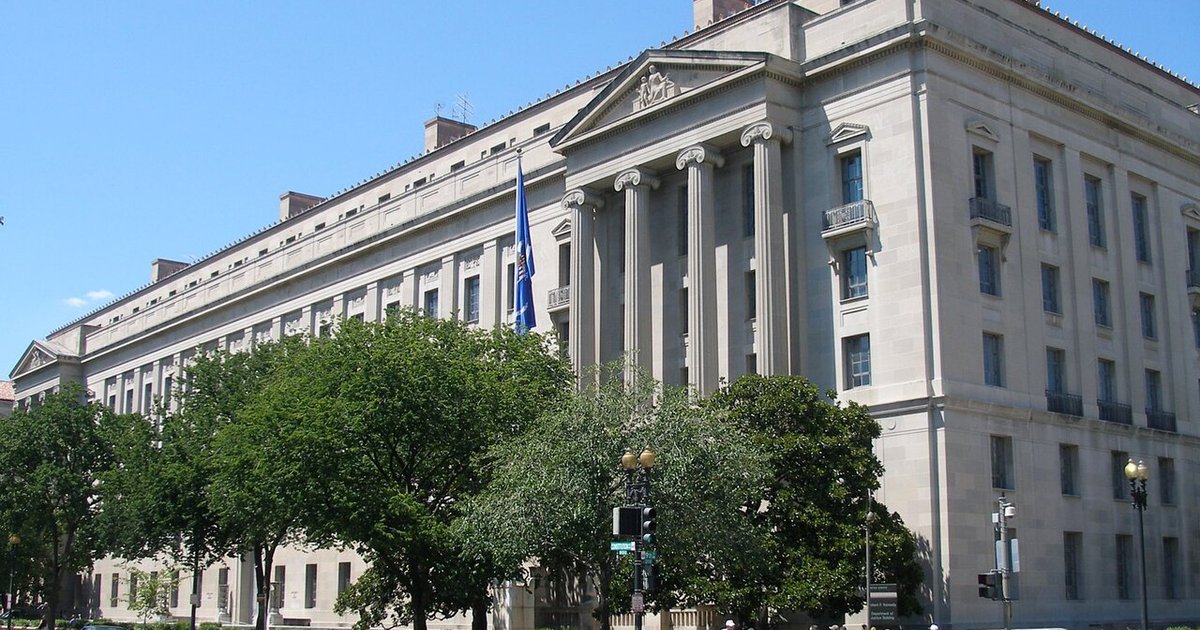
Justice Department
# INTELLIGENCE DOSSIER: US DEPARTMENT OF JUSTICE
The United States Department of Justice is the federal executive agency responsible for enforcing federal law and defending the constitutional interests of the United States under the Trump administration. As the primary legal enforcement apparatus of the 47th presidency, the DOJ wields extraordinary power over criminal prosecution, civil litigation, regulatory enforcement, and constitutional interpretation. Its strategic significance derives from control over approximately 93,000 employees and jurisdiction spanning federal crimes, antitrust enforcement, civil rights litigation, and appellate advocacy before the Supreme Court. The agency's current operational posture directly reflects Trump administration priorities and shapes domestic political outcomes across election integrity, corporate accountability, and institutional legitimacy.
The Justice Department maintains rank 170 on the LeadersCartel Power Index with a monitored-tier score of 1.9 across 207 intelligence sources. The signal distribution reads 0 high-impact, 1 emerging, and 0 watch signals, indicating minimal coordinated strategic messaging but concentrated emerging activity. This positioning reflects institutional recalibration under new leadership rather than power decline; the single emerging signal suggests DOJ is initiating policy shifts without yet achieving sustained organizational momentum. The monitored classification indicates DOJ remains under active analytical scrutiny for potential threshold changes in influence or operational scope.
Three concurrent developments demand immediate analysis. Trump's Justice Department has publicly identified deployment locations for US election monitors across all fifty states, signaling aggressive federal involvement in electoral oversight mechanisms. Simultaneously, DOJ action appears connected to broader democratic governance assessments reflected in headline analysis of "Midterms and the state of US democracy," suggesting institutional focus on electoral legitimacy questions. Most significantly, the administration has petitioned the Supreme Court to set aside 20,000 disputed California ballots, representing direct executive intervention in state-level electoral outcomes through judicial channels.
Analysts should monitor whether California's ballot challenge succeeds at the Supreme Court within 72 hours—this outcome would substantially elevate DOJ's LeadersCartel ranking by demonstrating successful constitutional leverage. Watch for organizational response from state attorneys general and whether Alphabet, given its California concentration, faces coordinated regulatory pressure alongside electoral disputes.