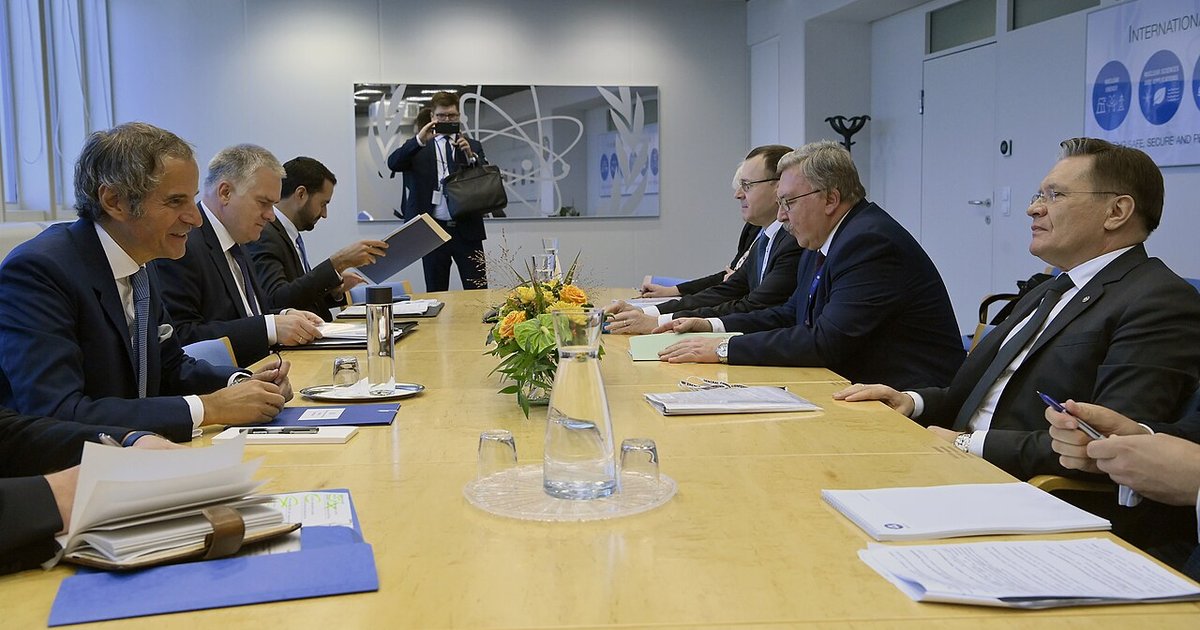
Russian nuclear specialists have returned to operate Iran's Bushehr nuclear facility, according to reporting from August 9, deepening a military-technical partnership that has accelerated since Western sanctions intensified. The move underscores how Moscow and Tehran are consolidating a strategic alignment that extends beyond Ukraine into the eastern hemisphere. The timing—amid a broader pattern of Russian cyber operations against NATO allies and Iran's own nuclear posturing—signals a deliberate effort to establish countervailing pressure against US strategic interests across two theaters.
Rosatom's renewed presence at Bushehr marks a departure from earlier operational constraints and reflects the two capitals' calculation that sanctions costs are now secondary to alliance deepening. According to Reuters reporting on August 9, the arrangement expands Moscow's direct role in Iran's nuclear infrastructure—a position the Kremlin has avoided explicitly claiming in prior years. The stationing of Russian technical personnel creates operational redundancy that insulates Iran from Western targeting of its civilian nuclear program and signals confidence in the durability of the Moscow-Tehran axis despite economic pressure.
The strategic significance extends beyond nuclear operations. Nikkei reported that Russia's cyber operations targeting Ukrainian IT workers have coincided with this infrastructure deepening, suggesting Moscow is testing NATO response capacity while simultaneously positioning Iran as a secondary node in anti-Western coordination. South Korea's reaffirmed refusal to supply weapons to Ukraine—first documented by Bloomberg—reinforces that the Russia-Iran alignment is successfully fracturing the Western consensus on Ukraine support, a direct consequence of perceived US weakness in managing coalition cohesion.
To be sure, Russia frames the arrangement as a technical partnership rooted in Iran's energy needs and Moscow's historical expertise in the sector—a position consistent with decades of Soviet-era cooperation. Yet the timing and scale of the commitment occur precisely when Western intelligence agencies have assessed Russia's defense industrial base as increasingly strained by Ukraine costs. The renewed Bushehr deployment suggests Moscow has calculated that doubling down on Iran creates asymmetric leverage: Tehran becomes less isolated, Moscow gains a geopolitical asset in the Persian Gulf, and together they establish a counterweight to US bilateral alliance structures in NATO and the Indo-Pacific.
What emerges is a realignment dynamic that the US has limited tools to interrupt. The Ukraine conflict has consumed American attention and resources; the Trump administration's visa revocations—175,000 documented by the Wall Street Journal—signal a contraction of US soft power precisely when alliance management demands expansion. Russia's decision to embed nuclear technicians in Iran is not a response to US pressure; it is a statement that the cost-benefit calculation of defiance has shifted in Moscow's favor. The alliance is consolidating because both parties assess that Western enforcement capacity has peaked.