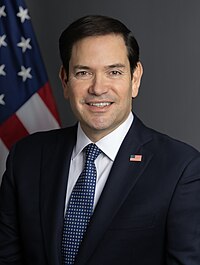
Russia and India are coordinating a counter-sanctions economic architecture at the BRICS forum in New Delhi, with Putin attacking Western "30,000 sanctions" and Modi highlighting India's business expansion as an alternative to dollar-denominated trade. The messaging signals an attempt to cement non-Western economic pathways at a moment when US enforcement capacity—stretched across Latin America, energy security, and Taiwan—is showing operational strain. Secretary of State Marco Rubio's focus on Colombia's cocaine trade, announced yesterday, highlights a competing priority hierarchy within the Trump administration.
Putin used the BRICS platform to challenge the legitimacy of Western sanctions enforcement itself, framing the cumulative weight of sanctions as an economic warfare tactic rather than legitimate statecraft. According to Reuters reporting on September 10, the Russian president positioned BRICS members as an alternative bloc insulated from unilateral Western coercion. The timing matters: it arrives as the EU explores new mechanisms to seize Russian assets, a move that threatens to accelerate capital flight from Western financial systems into currencies and assets controlled by BRICS nations. India's role as BRICS chair gave the messaging institutional weight, even as internal tensions between New Delhi and Beijing over supply-chain dominance persist.
Modi's parallel emphasis on India's business expansion—framed as "economic bridges" in official statements—signals a deliberate counter-positioning to Western trade orthodoxy. Nikkei Asia reported on the forum's messaging strategy, noting that India is actively courting investment from Western firms seeking alternatives to China exposure. This creates a tactical opening: India positions itself as BRICS-aligned while remaining economically entangled with the US and Europe. The result is a middle-power arbitrage that weakens unified sanctions enforcement; firms hedging against both US and China risk can now allocate capital through Indian intermediaries with partial political cover.
The strategic fracture becomes visible when US enforcement priorities are mapped against BRICS messaging. Rubio's public focus on Bogotá's cocaine traffic—first reported by Politico on September 9—reflects administration prioritization of Western Hemisphere security over containment of Russian or Chinese capital flows. To be sure, White House officials maintain the cocaine focus reflects genuine criminal justice concerns and reflects no retreat from Russia policy; yet the bandwidth signal is unmistakable. A Treasury Department stretched across sanctions administration, capital controls, and Latin American interdiction cannot simultaneously tighten enforcement against BRICS-coordinated asset moves.
The structural consequence is that Washington's sanctions regime, which has been the primary tool of American geopolitical leverage since 2022, is fragmenting into enforcement pockets rather than operating as a unified multilateral regime. Capital is observing this fragmentation. The divergence between US diesel prices surging past $6 per gallon—straining the transatlantic supply chain—and European inability to match US enforcement velocity on Russian assets suggests that sanctions effectiveness now depends on unilateral US will rather than allied coordination. BRICS messaging yesterday was not a new doctrine; it was recognition that allied consensus on Western sanctions has already fractured, and they are building political and economic structures to exploit that fracture.