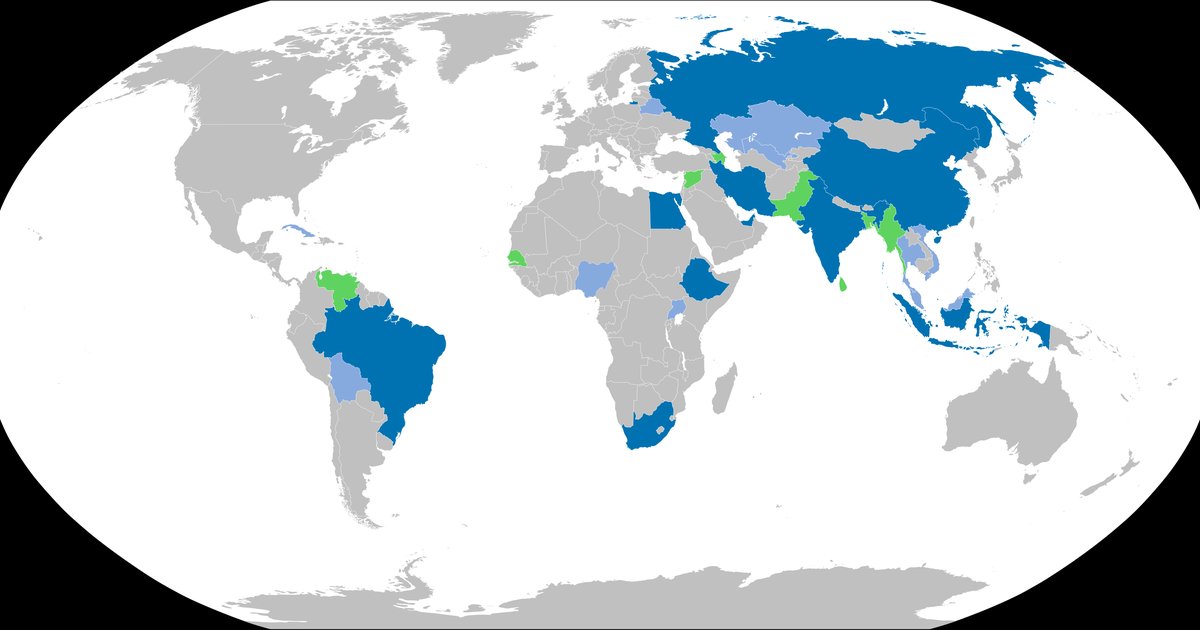
India and Russia formalized deep industrial and technology partnerships at the Innoprom trade exhibition in New Delhi on September 9, marking a shift from diplomatic statements to binding commercial cooperation. The move, first reported by Reuters, underscores a sustained effort to build BRICS bloc cohesion against Western economic pressure. The timing coincides with rising US semiconductor competition and growing European energy volatility, creating windows for non-Western alternatives to consolidate regional dominance.
The Innoprom initiative centers on joint development in critical sectors: defense manufacturing, aerospace components, and digital infrastructure. Narendra Modi's government has committed to reducing India's reliance on US and European supply chains, a strategic priority that has accelerated since 2022. According to reporting by Nikkei Asia on September 9, the partnership includes technology transfer agreements and joint production facilities designed to operate outside existing Western-controlled logistics networks. This represents a tangible commitment, not a rhetorical exercise.
Moscow's role as the primary non-US technology partner for India has hardened significantly over the past eighteen months. Russian officials, speaking to Al Jazeera, characterized the Innoprom framework as a 'proof of concept' for BRICS economic integration. India has historically balanced US and Russian ties; the current move suggests a deliberate tilt toward multipolarity. The partnership also signals to Pakistan and other regional actors that New Delhi is pursuing alternatives to Western gatekeeping on semiconductors and defense electronics.
The strategic significance lies in what this partnership forecloses for Western suppliers. US semiconductor export controls have created acute shortages in Indian defense and telecommunications sectors. By building Russian-Indian production chains for lower-node chips and critical components, the bloc reduces US leverage over India's industrial strategy. To be sure, India's political leadership has maintained that partnership with the US remains important; New Delhi has not abandoned Western defense contracts. Yet the Innoprom framework widens India's optionality in ways that US policymakers cannot easily reverse.
This development reflects a broader BRICS consolidation pattern. China's prior dominance in non-Western supply chains is now being competed for by Russian expertise and Indian scale. The analytical consequence is that Western sanctions on Russia, which Washington intended to isolate Moscow technologically, instead accelerated Russia's integration with India as an alternative partner. The US now faces a realignment it did not engineer: Moscow and New Delhi moving from transactional ties to structural economic interdependence. This hardens BRICS as a competing bloc and narrows US influence in Asia's industrial base.