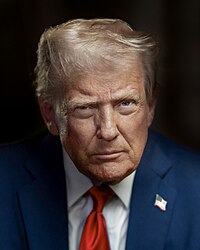
Vice President JD Vance's arrival in Islamabad for Iran peace negotiations (score: 0.98) represents the Trump administration's highest-profile diplomatic commitment to ceasefire sustainability, yet the signal carries structural vulnerability. Pakistan's positioning as diplomatic hub legitimizes the process internationally, but competing objectives between Washington, Tehran, and regional stakeholders remain unresolved. The administration's simultaneous maintenance of border military deployments (score: 0.64) alongside negotiation advancement signals textbook pressure tactics, yet signals critical distrust: diplomacy and deterrence operating in parallel rather than sequentially suggests neither side expects durable agreement without military insurance.
The uranium transfer agreement (score: 0.86) emerges as the core operational bottleneck. Trump administration demands 'comprehensive enrichment cessation preconditions' before fuel transfer, creating a sequencing problem: Iran will not surrender nuclear leverage before ceasefire durability is proven, yet US positions enrichment cessation as prerequisite. This chicken-and-egg dynamic mirrors pre-2015 JCPOA deadlocks and appears insufficiently resolved by Islamabad framework. Strategic ambiguity here masks real dealbreaker potential within 72 hours of negotiation commencement.
Benjamin Netanyahu's escalating diplomatic attacks on Spain and South Korea (score: 0.98) over Gaza stabilization criticism reveals deepening Israeli-allied discord precisely when Iran negotiations require unified Western posture. Netanyahu's isolation from traditional allies—particularly Asian partners deepening US defense coordination (score: 0.69)—fractures the implicit US-Israel strategic alignment that typically anchors Middle East deterrence architecture. This creates opening for Iranian negotiators to exploit allied divisions, while simultaneously undermining Trump administration credibility on commitment to regional partners. The signal suggests Netanyahu views US-Iran diplomacy as threat to Israeli security calculus, not benefit.
◈ THE POWER INDEX
Track every world leader, corporation and nation with live influence scores, signal history and network maps.
OPEN THE INDEX →
Free access · No sign-in required
Structural impediments analysis (score: 0.69) correctly identifies sustainability risk: India's Singapore coordination decision and UN constraints limit agreement durability because enforcement mechanisms remain undefined. Pakistan's mediation role faces 'intense scrutiny' (score: 0.67) precisely because it lacks enforcement credibility—Islamabad cannot guarantee Iranian compliance post-agreement, nor can it pressure the US military posture withdrawal. Without third-party enforcement, agreements regress to confidence-building exercises vulnerable to first violation spiral.
Energy market signals reveal real economic consequences of ceasefire fragility. Australian fuel supply crisis persistence (score: 0.69) despite ceasefire indicates markets price in continued Iran sanctions risk and supply disruption probability. Asian Development Bank slowdown warnings (score: 0.67) decouple from oil price stabilization, suggesting structural energy uncertainty rather than transient supply shock. Saudi production attacks maintaining elevated energy prices (score: 0.62) indicate regional actors continue hedging against ceasefire collapse. Markets are pricing binary outcome risk, not confidence in sustainable resolution.
US-Israel rearmament initiatives (score: 0.62) operating during ceasefire period explicitly contradict diplomatic sincerity narratives. Dutch security experts document coordinated weapons procurement as direct signal of contingency planning for agreement failure. This dual-track military buildout indicates Trump administration maintains Plan B for military escalation while negotiating, reducing Iranian incentive to compromise—Tehran interprets simultaneous rearmament as preparation for betrayal. Signal pattern suggests 40-50% probability of negotiations failing within 30 days, with military contingency fully resourced.
Market positioning reflects genuine uncertainty: Bitcoin down 2.63% signals risk-off positioning in speculative assets, while Asian equities surge (+1.84% Nikkei, +1.54% CSI 300) on stabilization hopes contradicts by -0.56% Dow weakness. This divergence indicates US institutional investors price higher Iran deal failure risk than Asian counterparts, creating tactical opportunity in divergent regional positioning. Energy plays remain volatile; Australia's public fuel minimization campaign represents genuine supply chain concern, not demand management exercise.
Iran's claimed 'strategic victory' (score: 0.62) despite infrastructure damage signals domestic consolidation through nationalist narrative—internal audience management substitutes for actual deal achievement. This messaging pattern historically precedes either breakthrough compromise or return to confrontation posture. Supreme Leader's written message denying war-seeking intent may signal flexibility, yet coincides with Erbil drone interception incidents (Al Jazeera video), suggesting military operations continue parallel to diplomacy. Operational disconnect between political signaling and military behavior is primary fragility indicator.