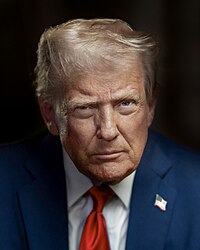
The dominant narrative threading today's intelligence signals reveals a critical inflection point in US-Iran strategic competition: the Trump administration's 'complete' naval blockade of Iran (score: 0.98) was predicated on successful diplomatic resolution in Islamabad, but those talks have collapsed, leaving Washington's coercive pressure strategy without political endgame. VP JD Vance's leadership of the Iranian delegation negotiations explicitly excluded Lebanon from ceasefire frameworks despite international pressure—a signal that Trump administration leverage was conditional on Iran accepting a bifurcated conflict architecture. The simultaneous signals of blockade announcement and failed negotiations suggest internal administration miscalculation: Vance's team may have overestimated Iran's desperation or underestimated China's willingness to sustain Tehran's economy through alternative trade corridors.
China's military deepening to Iran represents the structural weakness in Trump's blockade strategy. Intelligence reports confirm Beijing is preparing new weapons shipments to Tehran (score: 0.69) precisely during peace negotiations—a direct rejection of US pressure and tacit coordination with Russia-Iran-Cuba alliance frameworks detected by CIA analysts. This Chinese escalation is not tactical noise; it signals Beijing views Iran containment as a losing proposition and is instead hedging toward Tehran's survival through the blockade. The Dark Fleet operations continuing simultaneously (score: 0.69) indicate Iranian sanctions evasion infrastructure remains intact despite Trump's 'complete' blockade claims. Oil markets have stabilized on this perception—suggesting traders now price in a protracted stalemate rather than American victory.
The Strait of Hormuz becomes the physical battleground where Trump's naval blockade claims meet operational reality. Trump administration statements claim sea mines have been 'removed' from the Hormuz corridor (score: 0.75), yet US Navy transits lack explicit Iranian permission and Chinese military support deepens Tehran's ability to re-weaponize the strait. Maritime humanitarian data shows seafarers trapped near Hormuz reporting 'hardest situation ever' psychological conditions (score: 0.67)—a proxy indicator that shipping uncertainty persists regardless of US clearing claims. For energy markets, this ambiguity is more destabilizing than active conflict: OPEC members cannot accurately price risk when blockade effectiveness remains contested between Washington's claims and Tehran's demonstrated capability to sustain oil exports.
◈ THE POWER INDEX
Track every world leader, corporation and nation with live influence scores, signal history and network maps.
OPEN THE INDEX →
Free access · No sign-in required
The collapse of Islamabad talks signals deeper fracture in US regional strategy. Iran's diplomatic delegation arrival was framed as 'critical' and 'make-or-break' (score: 0.98), suggesting either US intelligence severely misjudged Iranian negotiating position or internal Trump administration factions (Bolton hardliners vs. Vance pragmatists) generated contradictory signals that Tehran exploited. Lebanon's explicit exclusion from ceasefire frameworks appears calculated to preserve US-Israel operational freedom while attempting to isolate Tehran—but this has instead strengthened Iran's Russia-Cuba alliance perception and emboldened South Africa mission diplomatic trolling of Trump (score: 0.67). The Iranian Supreme Leader Mojtaba's delegation management suggests Tehran obtained sufficient Chinese security guarantees to walk away from negotiations without existential cost.
Technology sector vulnerabilities intersect with this geopolitical crisis in underappreciated ways. OpenAI security issues following leadership vulnerability incidents (score: 0.92) and Anthropic's Claude Mythos hacking capabilities spreading to major tech firms (score: 0.71) indicate US technological advantage is eroding precisely when intelligence agencies require AI-enhanced Iran monitoring capabilities. CIA involvement in both signals suggests intelligence community concern that adversary access to frontier AI models compromises blockade enforcement intelligence collection. Chinese acquisition of early Claude Mythos access creates asymmetric risk: Beijing may possess superior predictive modeling for Hormuz shipping patterns than US Navy logistics systems.
Capital market reactions reveal sophisticated risk repricing. Bitcoin volatility (-2.59%) reflects energy cost inflation fears from blockade uncertainty, while emerging market surges (SENSEX +1.20%, Bovespa +1.12%, CSI 300 +1.54%) indicate institutional capital rotating toward nations positioned as Iran sanction-evasion hubs or Chinese alliance members. The Nikkei's +1.84% surge suggests Japanese energy buyers are already pricing in higher LNG import substitution. Notably, the Dow's -0.56% decline while global indices surge indicates US domestic equity markets are pricing in energy inflation drag and geopolitical risk premium—a signal that Trump's blockade is viewed as creating costs rather than securing strategic advantage.
India's military advancement and US-India defense coordination (score: 0.69) including MQ-9B drone cooperation appears timed as implicit hedging against Iran crisis escalation affecting Indian Ocean security. The Reserve Bank of India's rupee support measures facing effectiveness questions (score: 0.67) may reflect currency pressure from energy import cost expectations if Iran oil becomes unavailable to non-Chinese buyers. India's clearance of Lt Col Purohit for Brigadier rank amid this signal cluster suggests US-India strategic alignment is deepening precisely because Iran blockade failure creates power vacuum in Indian Ocean deterrence.
The gap between Trump administration messaging ('complete blockade,' 'mines removed') and operational reality (Dark Fleet continuing, Chinese weapons shipments prepared, Iranian capabilities intact) represents the most dangerous intelligence signal: adversary confidence that US pressure will fail. Iranian social media trolling of Trump via South Africa mission (score: 0.67) is deliberate psychological signaling that Tehran has negotiated safety guarantees sufficient to publicly mock American threats. This confidence posture, combined with collapsed diplomacy and Chinese military deepening, suggests Iran may escalate Hormuz operations to test blockade enforcement capacity—creating acute energy price shock risk in 48-72 hour window.