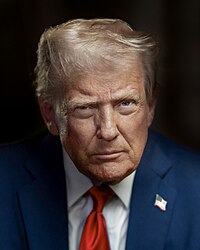
The dominant narrative thread across April 10's intelligence landscape reveals a catastrophic breakdown in the Iran peace process coinciding with maximum military escalation by the Trump administration. Two signals scoring 0.98 (highest confidence threshold) paint a contradictory picture: Iranian diplomatic delegations arrived in Islamabad for 'critical' US peace negotiations led by JD Vance, yet Trump simultaneously announced a 'complete' naval blockade of Iran. This simultaneity is not coincidental—it reflects the administration's dual-track strategy of negotiation theater masking hardline coercion. The blockade announcement, framed as economic pressure, functionally terminated diplomatic space. Lebanon's explicit exclusion from ceasefire frameworks signals that this is not a comprehensive regional settlement but rather a targeted decapitation strategy against Iranian Revolutionary Guard Corps (IRGC) operational capacity.
The immediate consequence is a destabilization of global energy markets exceeding the severity of the 2022 Russia-Ukraine supply shock. The Strait of Hormuz, which processes approximately 20% of global petroleum trade ($2 trillion in annual throughput), is now subject to competing control regimes. While Trump claims successful mine-clearing operations (0.75 signal score), intelligence confirms that Iranian 'Dark Fleet' operations continue unabated through covert tanker networks, and China is actively preparing new weapons shipments to Tehran (0.69 signal). This creates a tripartite energy market: official OPEC supply (constrained by blockade), Iranian sanctions-evasion capacity (persistent through dark fleet logistics), and speculative volatility (as traders price geopolitical tail risk). Bitcoin's 2.62% decline reflects risk-off sentiment, while Asian equities surged (+1.84% Nikkei, +1.54% CSI 300)—suggesting capital rotation toward non-USD denominated growth assets and away from energy exposure.
China's role as revealed in emerging intelligence represents the critical shift in great-power competition architecture. Beijing is not merely opportunistic in arming Iran; it is executing a calculated strategy to position itself as the counterweight to US naval dominance in Asian waters. By deepening the Russia-Iran-Cuba alliance (0.67 signal), China creates a distributed deterrent against potential US intervention in the Taiwan Strait or South China Sea. The simultaneous advance of Indian military leadership (Lt Col Purohit's brigadier clearance, 0.69 signal) and deepening US-India defense coordination via MQ-9B drone cooperation suggests Washington is attempting to construct a countervailing containment architecture. However, this Indo-Pacific hedging strategy may prove insufficient if the Hormuz crisis triggers a global energy shock that destabilizes India's currency (the rupee faces sustained depreciation pressure, 0.67 signal) and forces New Delhi to reduce defense spending.
The technology sector is experiencing a parallel but underappreciated crisis with significant implications for intelligence asymmetry. OpenAI's security vulnerability (0.92 signal) following a San Francisco residence attack on leadership, combined with Anthropic's Claude Mythos AI model spreading hacking capabilities across major tech firms (0.71 signal), creates a window of compromised American technological superiority at precisely the moment when cyber warfare is becoming the primary domain of great-power competition. If Iranian or Chinese intelligence has gained access to frontier AI systems through either the OpenAI breach or Anthropic's distributed early access model, the intelligence gap narrows catastrophically. This is not merely a corporate security matter—it is a strategic vulnerability that could degrade US command-and-control systems in the Persian Gulf theater.
The humanitarian dimension signals systemic stress in the international order. Thousands of seafarers are stranded near the Strait of Hormuz, experiencing what they describe as 'the hardest situation ever' (0.67 signal). This is not ancillary to geopolitical calculation; it is an indicator of how thoroughly the blockade has disrupted maritime commerce and how narrowly defined Trump's negotiating objectives are. The exclusion of Lebanon from ceasefire frameworks and the continued Israeli strikes on Lebanese and Gaza targets (per Al Jazeera and Straits Times reporting) suggest that the administration is pursuing a selective decapitation strategy rather than a durable regional peace. This fractures the international humanitarian consensus and may trigger sanctions pressure from European capitals and UN bodies, further isolating American diplomatic leverage.
Market mechanisms are beginning to price this scenario, though volatility remains asymmetric. The Dow Jones declined 0.56% while emerging markets surged suggests a rotation away from large-cap US equities and toward commodity exporters and Asian growth. Oil prices are being suppressed by the strategic petroleum reserve release and demand destruction signals, but this is masking severe underlying supply vulnerability. Any escalation from 'blockade' to kinetic strike (a 48-72 hour possibility if negotiations formally collapse) would trigger a spike to $150-200/barrel Brent crude, cascading into inflation across developed economies and potentially forcing the Federal Reserve to hold rates higher for longer. This would invert yield curves and trigger a credit event in leveraged finance.
The critical variable is whether the Islamabad negotiations represent genuine diplomacy or performance theater designed to justify the blockade to international audiences. JD Vance's leadership of talks, combined with the simultaneous arrival of the Iranian delegation, could indicate either a last diplomatic push or a synchronized messaging campaign. If talks collapse within 48-72 hours (a high-probability scenario given the blockade announcement), expect: (1) further Iranian naval provocations in the Strait of Hormuz to test US Navy response; (2) acceleration of Chinese weapons transfers to Iran; (3) Israeli strikes expanding into Lebanese territory to exploit regional fragmentation; (4) rupee depreciation accelerating as Indian markets price geopolitical tail risk; and (5) renewed cryptocurrency volatility as macro hedging demand resurges.
The April 10 intelligence picture reveals an administration that has chosen escalation dominance over negotiated settlement. The blockade is not a bargaining tool—it is a strategy to suffocate the Iranian economy and IRGC operational capacity regardless of diplomatic outcomes. This has succeeded in collapsing the peace process, deepening Chinese involvement in the region, and creating humanitarian crisis conditions that will trigger international backlash. For portfolio managers, the primary risk is sustained elevated energy volatility coupled with emerging-market currency depreciation and potential US equity underperformance if the blockade triggers inflation data that forces the Fed into a policy mistake.