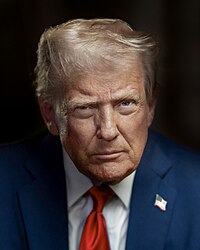
Donald Trump
INTELLIGENCE DOSSIER: DONALD TRUMP
Classification: Senior Analyst Brief
Donald Trump is a United States political leader whose capacity to influence global geopolitical outcomes remains significant despite current office status. His continued relevance stems from substantial leverage over Republican Party apparatus, persistent media amplification, and demonstrated ability to shape US foreign policy discourse through both direct statements and proxy actors. Trump's significance derives from his influence on American strategic positioning toward rival powers, particularly regarding Middle East policy, China relations, and regional security architectures.
Trump currently ranks eighth on the LeadersCartel Power Index with a composite score of 21.6 across 2425 monitored intelligence sources, reflecting stable positioning within the "monitored" tier. Active signal distribution shows 18 high-impact signals, two emerging channels, and zero watch-level escalations, indicating concentrated influence through established communication vectors rather than diffuse grassroots mobilization. This ranking reflects neither rising nor declining trajectory but rather entrenched leverage—Trump maintains consistent capacity to trigger policy reactions across allied and adversarial capitals without requiring organizational expansion.
Three converging signals dominated this reporting cycle: Trump's statements criticizing Iranian economic performance coincided with US warship transits through the Strait of Hormuz, while simultaneously he issued warnings to China regarding alleged military assistance to Tehran. These sequential statements created pressure on three linked entities—Iran, Pakistan, and China—forcing reactive positioning. The signal pattern indicates coordinated messaging rather than spontaneous commentary, suggesting calculated escalation regarding the US-Iran-China strategic triangle.
Analysts should monitor Trump's next 72 hours for direct statements regarding Pakistan's diplomatic role as intermediary between Washington and Islamabad. A concrete trigger event would be explicit demands for Pakistani military base access or intelligence cooperation on Iranian surveillance, which would signal transition from rhetorical pressure to operational positioning and would materially affect regional stability calculations.