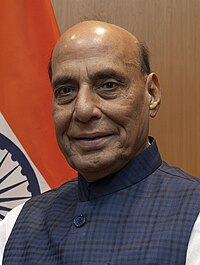
Rajnath Singh
RAJNATH SINGH INTELLIGENCE DOSSIER
Rajnath Singh is India's Defence Minister and a senior BJP leadership figure, currently ranking as one of India's most strategically influential policymakers in defense and security matters. His global significance stems from his portfolio control over India's $72 billion defense sector and his role in managing critical military modernization, bilateral defense partnerships, and regional security posture. Singh's position directly impacts India's defense procurement decisions, foreign military relationships, and strategic positioning against China and Pakistan, making him central to Indo-Pacific geopolitical calculations.
Singh maintains rank 102 on the LeadersCartel Power Index with a stability score of 0.70, tracked across 472 active intelligence sources. His signal distribution shows 1 high-impact signal, zero emerging indicators, and zero watch-list items, reflecting a consolidated but non-volatile profile. This tier-monitored classification indicates established influence without recent acceleration—Singh operates within predictable parameters as a seasoned defense minister rather than as a rising disruptive force. The signal distribution suggests his power base remains stable and institutionally anchored.
Three critical developments emerged this week. Singh announced a Germany visit beginning April 21, with submarine defense procurement flagged as central to negotiations, signaling India's acceleration of naval modernization against Chinese expansion in the Indian Ocean. Simultaneously, Singh issued public statements dismissing agricultural funding constraints, indicating confidence in sector stability despite inflation pressures. His assertion that India maintains adequate fuel stocks directly counters regional supply-chain anxiety narratives, positioning India as energy-secure—a geopolitically significant messaging campaign ahead of potential regional tensions.
Analysts should monitor the Germany defense visit outcomes, specifically any submarine contract announcements or technology transfer agreements, as these would signal India's strategic pivot toward advanced underwater capabilities. Watch for any rupture in Singh's domestic messaging consistency regarding agricultural or energy sectors, which could indicate internal policy conflicts. The specific trigger event: confirmation of submarine procurement timelines and technology specifications would represent material escalation in India's naval modernization, carrying direct implications for Chinese strategic response calculations in the Indian Ocean region.