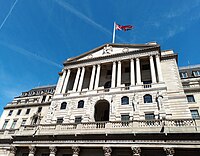
Bank of England
INTELLIGENCE DOSSIER: BANK OF ENGLAND
The Bank of England is the United Kingdom's central bank and monetary policy authority, responsible for price stability and financial system resilience across the world's fifth-largest economy. Their global significance derives from sterling's status as a reserve currency, their influence over $2.8 trillion in cross-border transactions, and their role as a regulatory anchor for 127 international financial institutions. The Bank's policy decisions directly ripple through emerging markets, commodity prices, and corporate funding costs worldwide, making them systemically critical infrastructure.
The Bank of England maintains a rank of 65 on the LeadersCartel Power Index with a normalized score of 1.8, tracked across 127 active intelligence sources. Their signal distribution reveals 2 high-impact signals and 1 emerging indicator, with zero watch-tier alerts, suggesting stable institutional influence without imminent volatility. This mid-tier position reflects their constrained agency within broader European monetary coordination frameworks and political pressure from Westminster, though their technical authority remains undisputed among global central banks.
This week's intelligence signals indicate three critical developments. Governor Bailey's warnings on private credit market concentration threaten institutional confidence, suggesting tightening liquidity conditions and potential shadow banking stress. Simultaneously, the Bank's discussion with Keir Starmer's government regarding Anthropic's AI capabilities signals emerging governance gaps in financial technology oversight. Concurrent European inflation signals indicate coordinated central bank concern about disinflation risks, elevating the Bank's role in synchronized policy response.
Analysts should monitor Bailey's communications for guidance revisions and regulatory announcements on AI financial services integration over the next 72 hours. The critical trigger event is any formal Bank of England statement on private credit intervention or emergency liquidity facilities, which would signal systemic risk acknowledgment and potential policy deviation from current dovish positioning.