Group of Seven
# INTELLIGENCE DOSSIER: GROUP OF SEVEN
GROUP OF SEVEN is a political and economic coalition comprising seven advanced democracies: Canada, France, Germany, Italy, Japan, United Kingdom, and United States. The G7 functions as an informal steering committee for Western economic and foreign policy, wielding disproportionate influence over global financial systems, trade regimes, and geopolitical responses to major powers. Its current significance centers on coordinating Western strategy toward China's economic assertiveness and Russia's continued regional aggression, while managing internal strategic realignment as the United States shifts posture under the 47th presidency and Germany stabilizes under Chancellor Merz's May 2025 transition.
The Group of Seven maintains rank 206 on the LeadersCartel Power Index with a consolidated score of 1.4 across 13 active intelligence sources. Signal distribution shows zero high-impact movements, zero emerging signals, and zero watch-tier alerts, indicating the coalition operates within expected parameters with no acute destabilization factors. This monitored-tier classification reflects mature institutional stability rather than declining influence; the G7's power derives from embedded structural advantages in global finance and defense rather than daily volatility. The flat signal profile suggests coordination machinery remains functional despite internal disagreements on China policy and defense spending.
Recent developments underscore mounting internal G7 friction. ECB President Lagarde's public statements urging talks on yuan undervaluation signal European concern that China's currency strategy disadvantages Western exporters, reflecting broader discord within the coalition over confrontation intensity. Simultaneously, European leaders including Macron and Merz confront strategic urgency: "As Europe rearms, can it decouple its military supply chains from China?" This headline captures a critical vulnerability exposed across the G7—technological and manufacturing dependencies on Beijing that directly constrain military autonomy during elevated tensions with Russia and potential future conflicts.
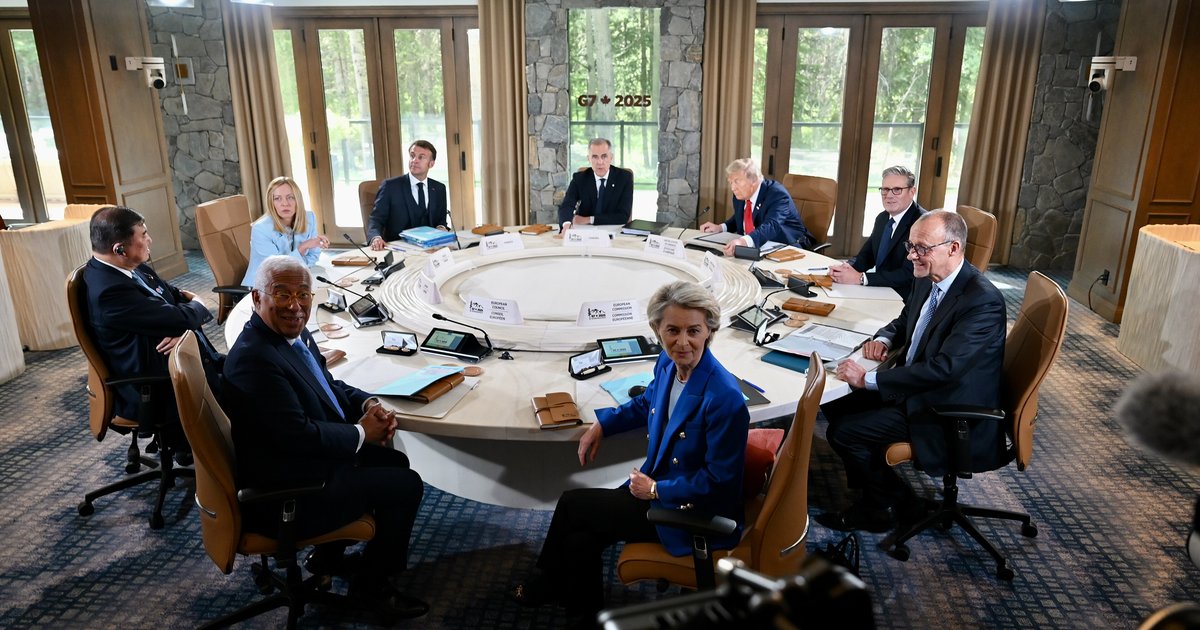
Analysts should monitor the June 2025 G7 summit schedule for consensus-building outcomes on yuan policy and defense industrial base decoupling timelines. The critical 48-72 hour trigger to watch: any statement from the 47th presidency on reciprocal tariffs toward G7 members, which could fracture the coalition's unified China-policy messaging and accelerate European strategic autonomy initiatives independent of Washington coordination.