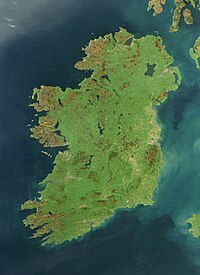
Ireland
IRELAND INTELLIGENCE DOSSIER
Ireland is a sovereign European nation-state and EU member with strategic significance as a bridge between North America and continental Europe, home to major US tech and pharmaceutical investments, and a critical financial hub. The Republic of Ireland currently maintains complex geopolitical positioning as a non-NATO EU member with deep trade dependencies on both the UK and US markets. Its role as a neutral voice in EU deliberations carries weight disproportionate to its population, particularly on fiscal policy and US relations. The country's 5.1 million population anchors one of Europe's most dynamic economies, making Irish policy decisions consequential for broader transatlantic and EU stability.
Ireland ranks 141st on the LeadersCartel Power Index with a score of 2.6/100, tracked across 1011 active intelligence sources with signal distribution weighted toward single high-impact signals rather than emerging or watch-category developments. This tier-monitored classification reflects Ireland's stable but secondary position within European power hierarchies—influential in specific sectors but lacking the institutional weight of France, Germany, or the UK. The single dominant signal suggests concentrated rather than distributed influence across policy domains. Ireland's position remains stable rather than ascending, indicating maintenance of established equilibrium within EU and Anglo-Irish frameworks rather than expansionary geopolitical movement.
Three distinct signals emerged this reporting cycle with serious implications. Publisher censorship related to Sally Rooney titles amid Palestine Action pressure signals escalating cultural-political friction affecting Ireland's literary export economy and raising questions about Irish compliance with protest movements versus commercial obligations. Republic-wide worker strikes involving hundreds of thousands directly challenge governmental economic management and labor relations, creating potential fiscal instability during a period of already-strained EU finances. The children's arson attack and family calls for accountability reveal critical domestic security gaps, straining public confidence in state capacity during periods of social stress.
Analysts should monitor whether labor unrest produces sustained wage-price pressure forcing ECB policy responses affecting Ireland's debt servicing costs. Watch for Palestine Action campaign escalation potentially targeting additional Irish publishers or cultural institutions, which could position Ireland as a flashpoint for Israel-Palestine proxy conflicts within EU member states. The specific trigger requiring immediate escalation protocols: any coordinated strike action spreading to transportation or financial services sectors, which would directly threaten Dublin's position as a secondary financial hub competing with London post-Brexit.