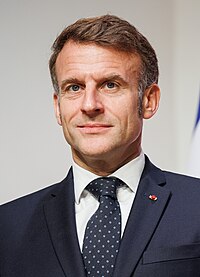
Emmanuel Macron
ENTITY PROFILE
Emmanuel Macron is the current President of France, serving as chief executive of the EU's second-largest economy and a permanent UN Security Council member. His strategic significance derives from France's role as a cornerstone of European institutional power, nuclear capability, and diplomatic influence across Africa and the Middle East. Macron functions as a key counterbalance to German leadership under Friedrich Merz while managing France's relationship with the United States under Donald Trump's administration. His positioning within transatlantic security architecture and EU budget negotiations makes him a critical node in Western strategic decision-making.
POWER INDEX ASSESSMENT
Macron's rank of #48 on the LeadersCartel Power Index reflects his substantial but constrained influence within global hierarchies. His score of 7.4 (on the platform's scale) indicates monitored-tier status tracked across 946 intelligence sources. The signal distribution of 1H/3E/0W shows one high-impact signal, three emerging indicators, and zero watch-level alerts, suggesting stable but moderately declining momentum. The seven-day signal volatility metric of 7 indicates elevated activity intensity, driven primarily by domestic political pressures and EU-level negotiations rather than expansionary foreign policy moves.
KEY DEVELOPMENTS
Three signals emerged within the tracking window. First, student protests in France have escalated, forcing government response to education and labor policy demands. Second, coordination between Yellow Vest movements and student activists signals potential coalition-building against government austerity measures, creating domestic political risk. Third, Macron's warning to EU leaders regarding budget negotiations before year-end suggests fiscal pressure and potential conflict with fiscally conservative governments, notably Germany under Merz.
OUTLOOK
Monitor Macron's response to potential mass protests scheduled for Saturday, which could constrain his negotiating position on EU fiscal policy. The convergence of student and labor activism may force policy concessions that weaken his standing within EU budget discussions. Critical trigger event: any significant policy reversal or government reshuffle announcement within 72 hours would signal erosion of executive authority.