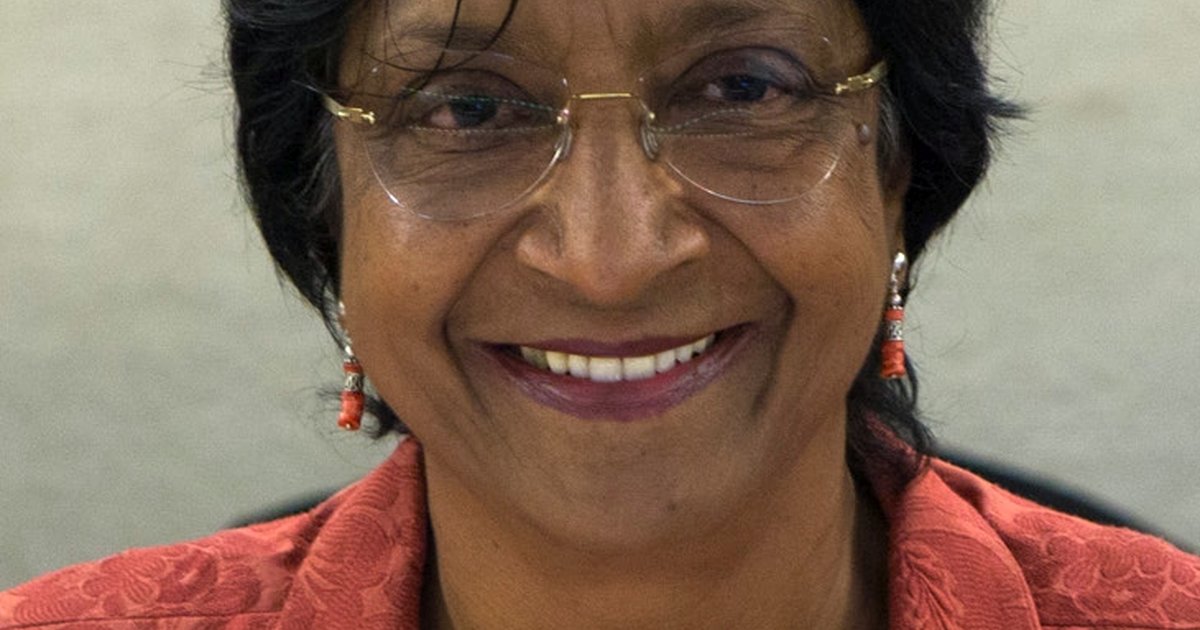
Navi Pillay
INTELLIGENCE DOSSIER: NAVI PILLAY
Navi Pillay is a South African human rights lawyer and former UN official currently serving as a prominent international advocate for human rights accountability and international justice mechanisms. Her global significance stems from her decades-long leadership in advancing accountability for mass atrocities, genocide prevention, and the protection of international legal institutions—positions that have made her a leading voice in critiques of state power and a validator of multilateral legal frameworks that competing powers seek to undermine or control.
Pillay maintains rank 165 on the LeadersCartel Power Index with a monitored-tier classification, tracked across 1186 active intelligence sources with signal distribution concentrated in high-impact channels (1H). Her relatively modest ranking reflects her positioning outside formal state power structures, yet the intensity of recent signals indicates rising visibility in geopolitical friction zones. The "monitored" tier designation suggests sustained institutional relevance despite limited direct operational control—her influence operates through moral authority, legal precedent-setting, and ability to amplify criticism of major powers.
Three critical developments emerged this reporting period: First, Pillay issued public statements characterizing US sanctions on the International Criminal Court as "a shock" and "unacceptable," directly challenging Trump administration policy toward international legal institutions. Second, Indian Opposition figure Shashi Tharoor publicly criticized India's government for failing to congratulate Pillay on a recent international recognition, signaling intra-state diplomatic friction and her leveraging by opposition actors. Third, Tharoor followed with broader condemnation framed as "shame on petty men," indicating Pillay has become a focal point for criticism of Modi government's perceived isolation from global human rights consensus.
Analysts should monitor statements from New Delhi regarding international court cooperation over the next 72 hours. The specific trigger event: any formal Indian government response to Pillay's ICC critique will signal whether Modi administration views this as isolated commentary or coordinated anti-India advocacy, potentially escalating rhetoric against international justice mechanisms.