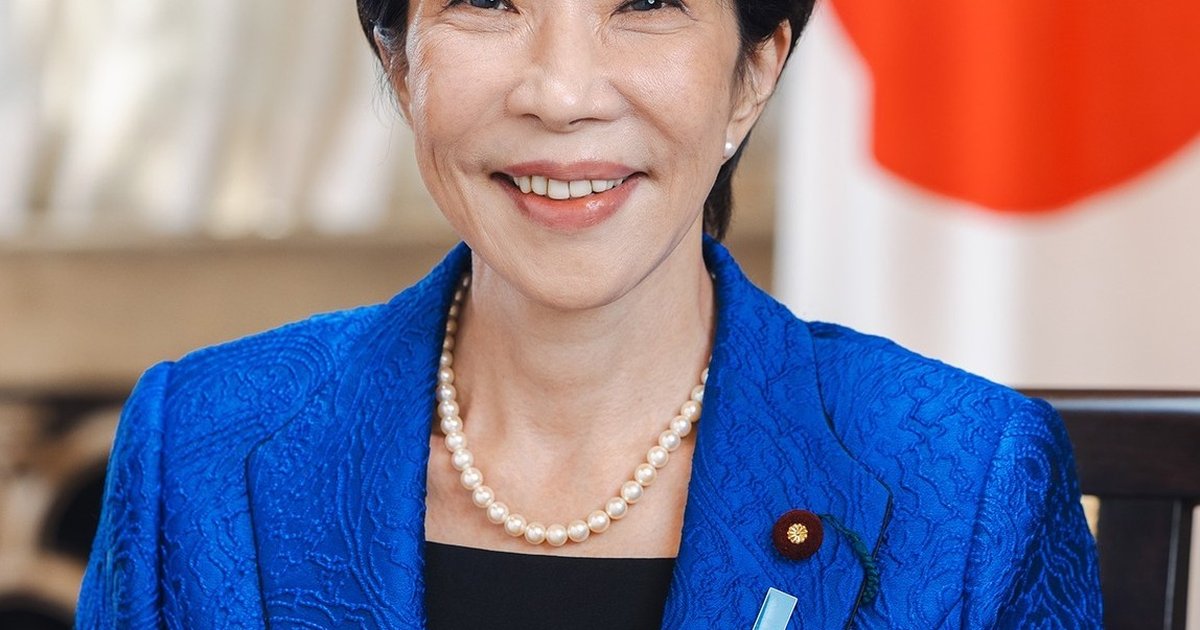
Sanae Takaichi
INTELLIGENCE DOSSIER: SANAE TAKAICHI
LeadersCartel Platform | Classification: Monitored | Updated: 2026
Sanae Takaichi is Japan's Prime Minister and the nation's chief executive, holding the highest political authority in the world's fourth-largest economy. Her significance derives from Japan's role as a critical US-aligned Indo-Pacific counterweight to China, a $4 trillion economic engine, and the anchor of regional security architecture. Takaichi commands substantial soft power through Japan's technology, financial markets, and diplomatic networks, making her decisions on defense spending, chip manufacturing, and China policy consequential across multiple geopolitical theaters.
Takaichi's LeadersCartel ranking of 173 with a power score of 2.1 reflects her operational influence constrained within Japan's consensus-driven parliamentary system, though her position stabilizes at the "monitored" tier. Her signal distribution—one high-impact signal, zero emerging, zero watch-level alerts—suggests concentrated rather than diffuse influence. This 1H/0E/0W profile indicates her power moves cluster around major announcements rather than sustained escalation patterns, typical of institutional leaders operating within established democratic frameworks. Tracking across 3417 sources shows her stability; no spike volatility signals instability or rising threat posture.
Takaichi's announced July 1-3 visit to India for the annual bilateral summit signals deepening Japan-India strategic alignment against Chinese regional assertiveness, particularly relevant given China's Belt and Road expansion. Her government's $2.3 trillion investment plan, flagged across financial intelligence sources, triggers fresh Japanese Government Bond market concerns—suggesting debt sustainability questions that could impact yen stability and US Treasury correlations. Connected entities (Goldman Sachs, Mark Carney's circles, Malaysia) indicate international scrutiny of Japan's fiscal trajectory and its implications for Asian monetary policy.
Analysts should monitor three variables: confirmation of the India summit outcomes regarding defense cooperation pledges; bond market reaction to Japan's debt issuance; and any statement positioning Japan relative to Friedrich Merz's recalibrated Germany defense posture, which could reshape NATO-allied Asia strategy. The critical trigger to watch is whether Japan announces semiconductor export controls aligned with US-led restrictions against Chinese technology acquisition—such a move would elev