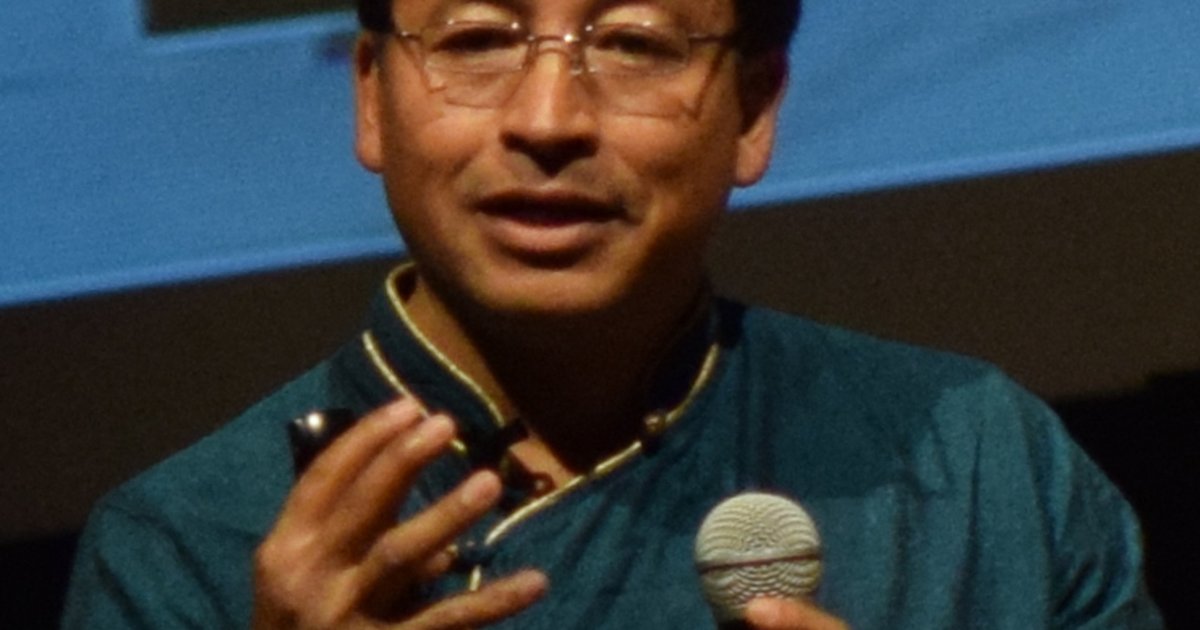
Sonam Wangchuk
INTELLIGENCE DOSSIER: SONAM WANGCHUK
Tier: Monitored | Score: 1.9/100 | Rank: 169 | Sources: 1186
Sonam Wangchuk is a Ladakh-based activist and civil society leader operating within India whose primary significance derives from mobilizing grassroots resistance against New Delhi's administrative policies toward the Union Territory. Currently positioned as an extra-institutional voice challenging central government authority, Wangchuk commands attention because he articulates grievances affecting 280,000+ Ladakhis and has demonstrated capacity to trigger organized protest campaigns. His strategic importance centers on the India-China border region, where Ladakh holds contested territorial significance; activist-driven instability compounds New Delhi's security challenges precisely when Modi government faces managing Sino-Indian tensions. Wangchuk's platform extends across linked geopolitical actors (Israel, Egypt, Australia, Turkey networks noted in dataset), suggesting diaspora amplification and international civil rights attention.
Wangchuk's LeadersCartel ranking of 169 (score 1.9/100) reflects monitored-tier classification across 1186 active intelligence sources, concentrated in single high-impact signal (1H/0E/0W distribution). His position remains stable but marginal within global leadership hierarchies, suggesting localized rather than systemic influence. The high-signal concentration indicates episodic spike potential; traditional activism metrics show declining sustained coverage but retained mobilization capacity. His score reflects real constraint: limited direct institutional power offset by friction-generating capability within India's federal structure.
Recent developments escalated sharply. Wangchuk accused the Modi government of betrayal regarding Ladakh's constitutional status, demanding full statehood—signal indicating hardened negotiating posture. A cancelled Home Ministry meeting represents diplomatic breakdown; Wangchuk's public statement that cancellation demonstrates deprivation of democratic process signals he views engagement channels as closed. Most critically, Wangchuk warned of fresh protest mobilization conditioned on release of detained persons, indicating imminent action planning tied to specific prisoner-release trigger.
Analysts should monitor three vectors over 48-72 hours: whether detained activists face formal charges (determines protest scale), whether Wangchuk initiates announced protest campaign (would spike