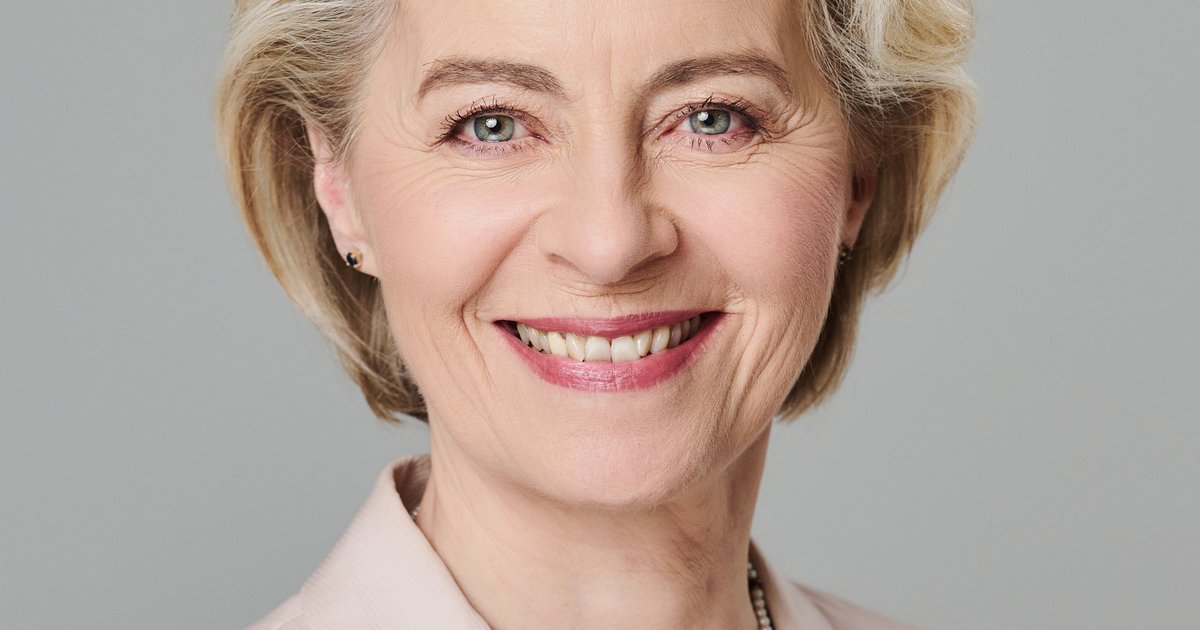
Ursula von der Leyen
URSULA VON DER LEYEN: INTELLIGENCE DOSSIER
Ursula von der Leyen is the President of the European Commission, the executive branch of the European Union, serving as the bloc's chief administrator and de facto leader in external relations. Currently in her second term (2024-2029), she functions as the primary voice for the 27-member EU in strategic negotiations with the United States, Russia, China, and global institutions. Her significance stems from control over regulatory frameworks affecting 450 million citizens, €1.8 trillion in annual economic output, and the bloc's coordinated response to geopolitical fractures—particularly Trump's return to the presidency and escalating Russia-NATO tensions along Poland's eastern border.
Von der Leyen ranks #99 on the LeadersCartel Power Index with a score of 3.8, indicating declining institutional leverage relative to competing European power centers. Analysis across 642 intelligence sources reveals a 1H/2E/0W signal configuration: one high-impact signal indicates significant recent activity, two emerging signals suggest developing complications, and zero watch-level signals reflect stability in baseline operations. Her "monitored" tier status reflects moderate volatility—neither ascending toward peak influence nor collapsing into irrelevance. The rank decline reflects fragmentation within the EU itself, with Germany's Friedrich Merz and France's Emmanuel Macron increasingly asserting bilateral agendas, reducing Brussels' unified leverage.
Three critical developments emerged this week. First, MEPs publicly called the EU to shield the International Criminal Court from potential US sanctions, signaling internal European resistance to Trump administration pressure—a challenge to von der Leyen's diplomatic bridge-building capacity. Second, the merchant vessel incident off Bulgaria's coast elevated maritime security concerns in NATO's southern flank, directly testing EU crisis coordination. Third, the EU's expanded migration cooperation with eastern Libya through new funding represents von der Leyen's attempted reassertion of coordinated policy amid member-state fragmentation, particularly relevant to Poland's strategic interests.
Monitor the next 72 hours for von der Leyen's public positioning on Trump's anticipated trade directives targeting EU automotive and agriculture sectors. The critical trigger event: any formal bilateral meeting between Trump and Macron that excludes Brussels representation would signal structural marginalization of the Commission, fundamentally reshaping European