International Energy Agency
INTELLIGENCE DOSSIER: INTERNATIONAL ENERGY AGENCY
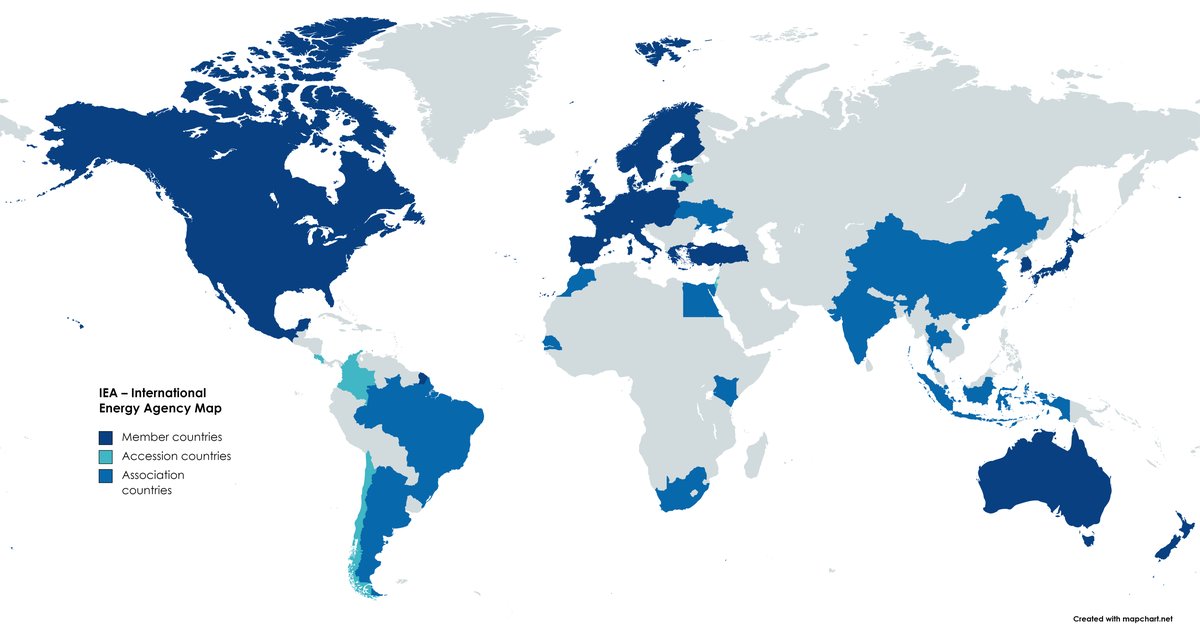
The International Energy Agency is an intergovernmental organization headquartered in Paris that serves as the primary global authority on energy policy analysis, market forecasting, and strategic reserves coordination for 31 member states representing approximately 75 percent of global energy demand. Operating under OECD framework since 1974, the IEA functions as the de facto intelligence apparatus for energy markets, wielding significant influence over policy formation in developed economies including the United States under President Trump, the European Union under Chancellor Merz and President Macron, and the UK under PM Keir Starmer. Their strategic significance derives from exclusive access to production data, consumption patterns, and reserve levels that shape trillion-dollar investment decisions and geopolitical resource competition.
The International Energy Agency maintains a rank of 161 on the LeadersCartel Power Index with a tracked score of 2.5, monitored across eight intelligence sources with signal distribution weighted toward emerging data (1E) and one established high-impact signal (0H), indicating a measured institutional presence without acute volatility. The organization's positioning reflects stable institutional authority rather than directional momentum—their power derives from analytical credibility rather than executive action capacity. The single emerging signal suggests incremental shifts in energy market interpretation that may trigger downstream policy responses among member state governments.
Three critical signals emerged this cycle. The headline "Coal Remains The Undisputed King Of Global Power" signals persistent demand despite energy transition narratives, directly impacting India's Modi administration and Vietnam's energy infrastructure planning. The alert "Goh: Long Mideast Conflict Hit Crude Product Prices" references supply disruption consequences affecting OPEC calculations and geopolitical risk premiums. Most significantly, "Oil Prices Fall as OPEC and IEA Slash 2026 Demand Outlooks" indicates coordinated downward market signaling—suggesting the IEA has substantially revised global economic growth assumptions, a signal that cascades to Trump administration energy policy and Russian petroleum export planning.
Monitor the next 72 hours for IEA revision statements targeting 2026 demand curves and any formal guidance adjustments to member states on strategic petroleum reserve management. The critical trigger event is whether the IEA issues formal guidance contradicting OPEC production maintenance strategies, which would signal