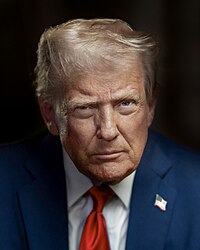
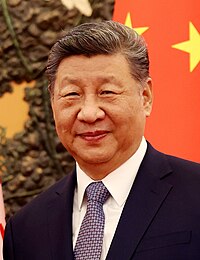
Donald Trump responded to a Supreme Court ruling preserving birthright citizenship by sarcastically congratulating Xi Jinping on Monday, escalating rhetorical pressure on China as the former president faces repeated legal defeats on core policy fronts. The clash signals a widening gap between Trump's stated confrontational stance toward Beijing and his ability to execute that agenda through US institutions. The move coincides with mounting evidence that Washington's technology export regime is fragmenting under competing priorities.
Trump's post-ruling comment marked an unusually direct pivot from domestic judicial loss to foreign policy messaging, according to analysis of his public statements on June 28. The birthright citizenship decision constrains Trump's ability to reshape immigration policy through executive power—a central 2024 campaign promise. By invoking China, Trump appeared to signal that his confrontational posture toward Beijing remains intact despite the institutional check, a form of signaling to allies and domestic constituencies that his strategic intent has not shifted. The maneuver reveals the structural problem facing any renewed Trump administration: executive authority over foreign policy remains broader than over domestic constitutional questions.
The timing amplifies an existing fracture in US technology governance. Nikkei Asia reported on June 27 that the Internet Engineering Task Force's founding father is retiring amid a sweeping regulatory transformation, as Washington systematically loosens artificial intelligence export controls. This apparent contradiction—Trump signaling hardness on China while US policy liberalizes AI access—reflects bureaucratic and congressional pressures that supersede presidential rhetoric. Officials at the State Department and Commerce have moved to ease restrictions on semiconductor and AI exports to non-adversarial nations, a reversal of the Trump administration's original 2017-2021 stance.
To be sure, Trump has consistently framed China engagement through a lens of strategic competition rather than containment, and aides have described recent policy shifts as tactical recalibration, not strategic retreat. Defense News reported that a fresh authorization for increased military spending has triggered state-level competition for contracts, suggesting Trump's defense posture remains oriented toward sustained deterrence and capability building. The apparent contradiction between loosening AI exports and hardening China rhetoric resolves when examined through the lens of fragmented institutional authority: the executive branch cannot simultaneously control the courts, Congress, and the technology sector simultaneously.
What emerges is a pattern of misalignment between Trump's strategic signaling and institutional capacity to execute. The Supreme Court decision on birthright citizenship is not primarily a loss on the merits of the policy itself; it is a constraint on executive power that ripples across other domains. China policy under a renewed Trump administration would likely encounter similar friction—announcements of confrontation paired with institutional limits on tariff authority, technology controls, and military posture. The question now is whether Trump's coalition can rebuild sufficient institutional control to translate rhetoric into policy, or whether the next administration inherits the same fragmentation.