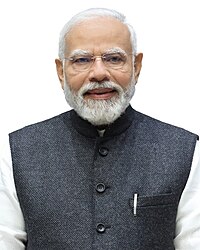
India is reshaping its regional partnerships at a moment of acute internal strain. Modi's deepening ties with Japan and Indonesia, announced over the past 48 hours, come as an Indian judge authoring a UN report on Gaza is calling on New Delhi to halt arms sales to Israel. The moves signal a shift in how India is balancing its Indo-Pacific positioning against pressure from within its own civil society.
Modi's outreach to Tokyo and Jakarta reflects a deliberate strategic tilt toward containing Chinese influence in Asia, according to reporting from Nikkei Asia and regional diplomatic cables. The timing, however, coincides with domestic pressure. An Indian judge drafting a scathing UN report on Gaza operations is publicly urging the government to cease arms supplies to Israel, according to multiple outlets reporting on Sunday. For its part, New Delhi has maintained that arms sales to Israel are separate from its diplomatic positioning on Palestinian affairs. The tension reveals a widening gap between India's defense partnerships and its domestic political landscape.
India's economic conditions are accelerating the strategic realignment. The services sector hit a 17-month growth low last week as hiring stalled, according to Bloomberg reporting on July 1st. Meghalaya state is facing an 80 percent rainfall deficit, with El Niño forecasts threatening broader South Asian agricultural output through autumn. This combination of drought and labor-market deterioration is narrowing New Delhi's room for maneuver on foreign policy. Officials are managing simultaneous crises: climate stress domestically, a fractured domestic consensus on Middle East arms policy, and the need to maintain defense relationships that hedge against Chinese expansion.
The strategic shift carries risks. India's defense partnership with Israel has become a pillar of its Indo-Pacific strategy, providing intelligence capabilities and weapons systems that support operations in the Indian Ocean. Publicly distancing from Israeli operations, even as Modi courts Japan and Australia under the Quad framework, could complicate intelligence-sharing arrangements and signal inconsistency to security partners. Yet the UN report and domestic judicial pressure appear to be a constraint Modi cannot simply override without incurring political cost at home. The calculus suggests India is attempting to compartmentalize: deepen Quad ties and Japan alignment while managing Gaza optics through domestic gestures.
What emerges is a state managing competing pressures rather than executing a coherent strategic reorientation. India's shift toward Japan is genuine and operationally significant—the Quad partnership is consolidating as a counterweight to Beijing. But the simultaneous pressure on arms sales to Israel, rooted in judicial authority and civil-society mobilization, reveals limits to New Delhi's freedom of action. A state under climate stress and slowing growth is less able to absorb the diplomatic costs of unpopular foreign partnerships. The result is a narrowing of strategic flexibility precisely when the Indo-Pacific competition with China demands it most.