SK Hynix raised $26.5 billion in the largest foreign initial public offering on US markets, signaling a decisive shift by South Korean chipmakers toward American manufacturing and capital markets. The listing coincides with $250 billion in new US semiconductor commitments by Micron and looming typhoon damage to East Asian fabs. Together, these moves reshape where memory chip supply originates and who finances it.
SK Hynix's debut on US exchanges marks the first time a South Korean memory-chip maker has raised this scale of capital from American investors, according to Bloomberg Markets reporting on July 10. The pricing reflects institutional confidence in the company's pivot toward US-based production, a shift driven by both supply-chain resilience concerns and access to American capital pools. The IPO's scale—larger than the 2023 Saudi Aramco offering—signals that US institutional investors are repricing South Korean semiconductor assets as essential to Western technology security rather than as regional Asian plays.
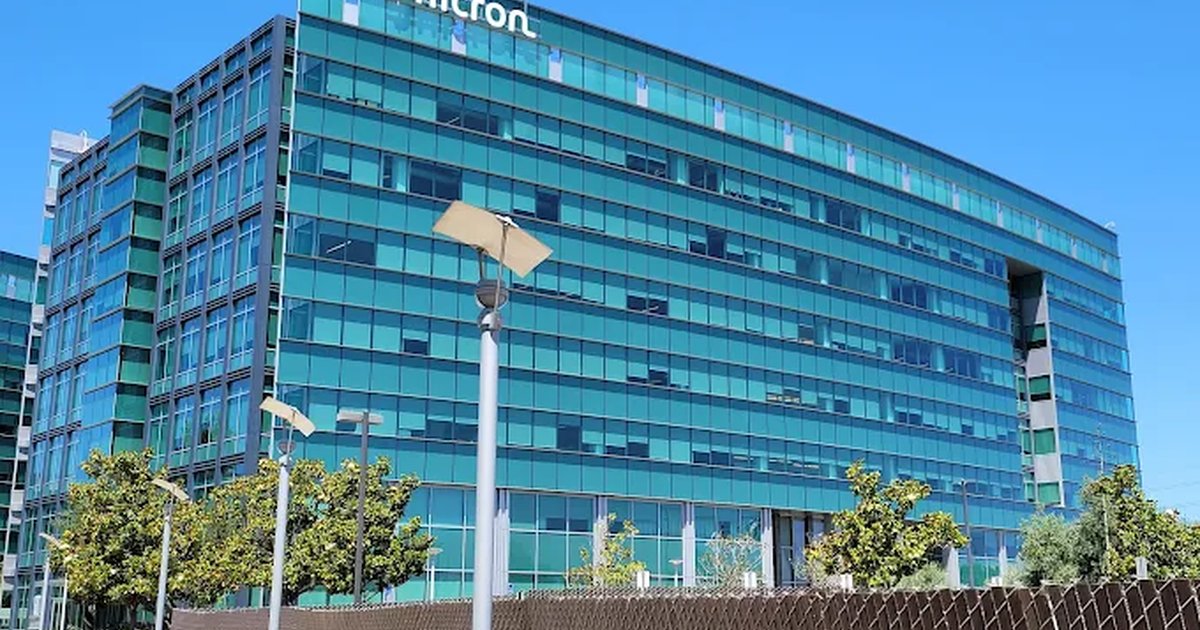
Micron's announcement of $250 billion in US spending, first reported by Reuters, underscores the capital intensity now required to compete in memory manufacturing. The commitment includes $500 million in additional 300mm wafer-fab capacity, the only such facility in North America. According to semiconductor analysts cited by Nikkei Asia, this spending surge reflects a deliberate decoupling from China and a hedge against Asian supply disruptions—a calculation that SK Hynix's US listing itself validates.
Yet supply-chain risk remains acute. Super Typhoon Bavi, spanning an area equivalent to France, is forecast to bring extreme rainfall across Taiwan, South Korea, and Japan through July 11, according to forecasts cited by Channel News Asia. Taiwan's TSMC and South Korea's Samsung both operate fabs in the storm's path. To be sure, modern fabs are engineered for weather resilience, but power outages and logistics delays remain material risks. A multi-day production loss in memory fabs ripples through global consumer electronics within weeks.
The convergence of capital reallocation and climate risk is repricing memory-chip stocks. SK Hynix shares rose 3.2% on the IPO news, while broader semiconductor indices showed mixed moves—the Nikkei 225 gained 1.2%, but volatility in DRAM futures widened. Institutional money is rotating toward companies with US manufacturing exposure and away from pure-play Asian fabs, a shift that will persist if typhoon damage materializes or if US fab capacity comes online faster than expected.
The deeper signal is that geography is now a pricing variable in semiconductor markets. Capital is flowing toward US-domiciled production and towards companies listing on US exchanges, reducing geopolitical and weather concentration risk. SK Hynix's $26.5 billion raise is not just a capital event—it is a reallocation bet that US semiconductor sovereignty commands a premium, one that recent investment commitments and natural disaster risk have made explicit.