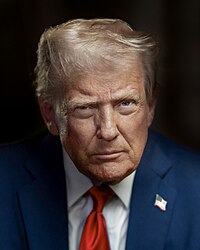
An Iranian assassination threat forced the secret evacuation of Donald Trump from Turkey using a catering truck on August 10, according to reporting by multiple US officials. The incident underscores the fragility of Trump's personal security footprint in the Middle East and marks the sharpest escalation of US-Iran tensions in months. Simultaneously, Russia is consolidating control in Syria while Iran expands transport corridors through the Caspian region—a coordinated shift that reshapes the balance of power between Washington and an increasingly aligned Iran-Russia-Turkey axis.
Trump's evacuation—first reported by the New York Times and confirmed by defense officials—reveals Tehran's willingness to target a former and potentially future US president operating outside secure US territory. The threat assessment was deemed credible enough that Air Force One became a flying decoy while Trump boarded a commercial flight disguised within airport catering operations. The operational shift signals a departure from Iran's traditional posture of deterrence through proxy networks. Instead, Tehran appears to be moving toward direct confrontation with US leadership, a change in approach that Western intelligence officials say reflects confidence born from deepening partnerships in the region.
Parallel to the Trump incident, Iran is strengthening its transport infrastructure across the Caspian Sea. According to reporting from Al-Monitor on August 9, Tehran has accelerated logistics cooperation with Turkmenistan, routing goods and materials away from traditional chokepoints controlled by US sanctions. This infrastructure play is not incidental. It signals Iran's ability to sustain its economy and military supply chains independent of Western interdiction—a posture impossible without tacit or active support from Russia and Turkey.
Russia, for its part, is deepening its military footprint in Syria. Defense News reported on August 8 that Moscow has expanded its naval presence and air operations in Syria beyond previous levels, even as a Syrian court sentenced Bashar al-Assad to death in absentia. To be sure, Russia frames its Syria deployment as a stabilization measure necessary to prevent extremist resurgence. Yet the timing and scope suggest Moscow is consolidating a strategic asset—a forward base in the eastern Mediterranean and a platform for projecting power toward the Suez Canal and beyond.
The convergence of these three moves—Iran's direct targeting of US leadership, Tehran's transport-corridor expansion, and Moscow's Syria consolidation—indicates a regional bloc emerging in opposition to US interests. This is not a formal alliance in the Cold War sense. Rather, it reflects a shared interest among Tehran, Moscow, and Turkey in reshaping the Middle Eastern order without Washington's consent. Pakistan's recent defense agreement with Turkey and Saudi Arabia, welcomed by Qatar, adds a layer of south-Asian legitimacy to this realignment. The tactical picture is fragmenting: the US no longer commands a unified coalition in the region, and the Trump administration's diplomatic hand has narrowed measurably since the Turkish incident.
What emerges is a region in active reorganization. Iran has moved from deterrence-through-proxies to direct confrontation with US principals. Russia is converting tactical gains in Syria into longer-term strategic infrastructure. And Turkey remains the hinge—aligned with Russia and Iran on Syria and economic corridors, yet still formally aligned with NATO. The US position, by contrast, is reactive. Trump's forced evacuation is a symbol of that reactive posture, and it will shape how capitals read American resolve in the months ahead.