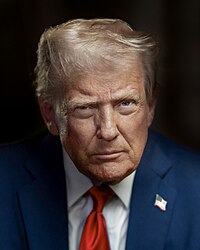
The Trump administration announced partial control of Venezuela's 65-billion-barrel oil reserve on August 27, marking the most direct US assertion of energy dominance in the Western Hemisphere in a decade. The agreement, details sparse, signals a shift in how Washington is consolidating energy leverage ahead of potential Iran negotiations. The move comes as global commodity markets tighten and as US enforcement pressure on Iranian oil sales creates cascading realignment across OPEC and its non-aligned producers.
The Venezuela arrangement represents a departure from prior US policy of sanctions-based pressure without operational control. According to reporting by the South China Morning Post on August 27, Trump framed the deal as securing American energy independence and limiting adversary influence over Western Hemisphere supply. The explicit claim of US operational stake in Venezuelan reserves—rather than proxy support for opposition figures or targeted sanctions—resets the calculus for regional state actors. Moscow and Beijing, which have maintained financial and military ties to Caracas as a counterweight to US influence, now face diminished returns on those investments.
The timing suggests coordination with US energy strategy elsewhere in the region. Wall Street Journal reporting indicates Trump is convening oil refiners this week to discuss fuel prices, a signal that Washington intends to use its newfound Venezuelan access as a lever on domestic and global crude costs. If the US can route Venezuelan barrels through American refineries and Caribbean infrastructure, it bypasses OPEC coordination entirely and reduces reliance on Middle Eastern suppliers—a central pillar of Trump's stated Iran pressure campaign.
To be sure, the Venezuelan government has not formally ceded operational control, and Caracas maintains that any arrangement preserves national sovereignty. Yet the announcement's specificity—65 billion barrels, partial control, unnamed corporate partners—suggests a governance framework already exists. This signals potential shifts in how Venezuela sources capital for its collapsed energy sector, a development that would fragment what remains of the Sino-Russian support architecture in the region.
The strategic consequence is immediate. By securing Western Hemisphere energy leverage independent of OPEC mediation, Washington narrows Tehran's negotiating room on the Iran file. A US-Venezuela supply channel reduces the leverage Iran holds via its own crude exports and its ability to disrupt Hormuz shipping. For regional actors—Colombia, Brazil, Trinidad—the deal reorders alliance incentives. Investment flows and trade partnerships now calculate toward a US-centric energy ecosystem rather than a fragmented, multilateral one. The realignment is structural, not transactional.