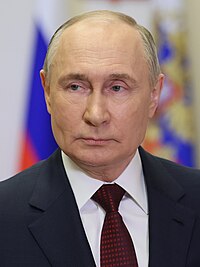
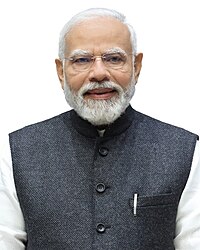
Vladimir Putin has moved to deepen Russia's economic partnership with India beyond traditional logistics arrangements, offering uranium storage and broader trade cooperation as Moscow seeks to offset Western sanctions impact. The pitch comes as Captain Smit Machchhar's heroism in a FlyDubai security incident near the Strait of Hormuz has elevated India's strategic profile in one of the world's most contested maritime corridors. Together, the moves suggest a coordinated effort by Moscow and New Delhi to position themselves as central actors in a multipolar security architecture independent of Western institutional frameworks.
Putin's overture marks a departure from Russia-India ties historically anchored in military procurement and energy logistics. According to reporting by Al-Monitor on September 29, the Kremlin leader offered to store Iranian uranium on Russian territory as part of a broader package of economic cooperation with New Delhi. The offer, made amid Putin's praise for Tehran's role in a multipolar world order, signals Moscow's intent to knit together an alternative economic bloc that includes China, Iran, and India outside traditional Western institutional constraints.
India's role in this realignment has been amplified by the Machchhar incident, which gained high-profile recognition from Prime Minister Narendra Modi and his administration. Reuters reported on September 30 that the Indian pilot's actions in averting a security threat near the Strait of Hormuz drew official state celebration, reinforcing India's positioning as a responsible maritime actor in a region where US Navy presence remains dominant. The timing aligns with India's growing naval capabilities and its expanding role in regional security architecture independent of Western alliance structures.
The convergence of these two developments—Putin's economic pitch and India's elevated maritime stature—reflects a broader strategic calculation. Moscow's willingness to offer uranium storage and economic deepening suggests confidence that New Delhi remains insulated from Western sanctions pressure and willing to deepen ties despite international legal risk. For its part, India has historically framed such partnerships as expressions of strategic autonomy rather than alignment against the West, a position New Delhi maintains even as energy and defense ties with Russia deepen.
The strategic significance lies not in individual transactions but in the velocity of institutional binding. Nikkei Asia reported on September 28 that Russia-India economic discussions have accelerated beyond their traditional focus on arms sales and energy. This signals Moscow's urgent need to establish economic anchors outside the Western financial system as sanctions on Russian banks tighten. If India accepts expanded roles in uranium handling, technology transfer, or trade settlement mechanisms, it would represent a material shift in the geopolitical center of gravity in Asia—one that challenges Washington's ability to maintain alliance cohesion in the Indo-Pacific.
The structural implication is clearer now than it was six months ago. Putin is no longer simply maintaining a client relationship with India; he is attempting to construct a parallel economic infrastructure that positions Russia as indispensable to Asian security and energy architecture. India's acceptance of this expanded role would suggest that New Delhi calculates greater benefit from hedging between Washington and Moscow than from formal alignment with the West—a decision that would accelerate the multipolar reordering Putin is openly pursuing.