Russia and Belarus announced a significant strengthening of their joint defense architecture on October 25, with both nations committing to deeper military coordination and integrated command structures. The move represents a deliberate hardening of the Russia-Belarus Union State framework as NATO presence intensifies along their western border. The decision comes amid concurrent reports of synchronized cyber threat preparation targeting Australian infrastructure, suggesting a broader pattern of coordinated military and asymmetric capability development across Russian-aligned states.
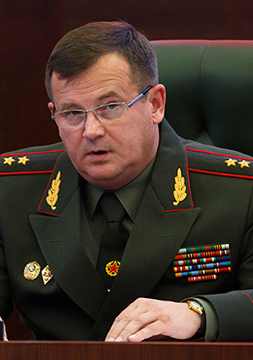
The deepening military integration reflects Moscow's effort to consolidate its eastern flank against what both capitals describe as NATO encroachment. According to Reuters reporting on October 25, the two nations have established joint operational protocols and enhanced intelligence-sharing mechanisms designed to enable rapid coordinated response. Belarusian Defense Minister Andrei Ravkov framed the arrangement as defensive, telling state media: "This is not a provocative step but a necessary response to NATO positioning on our borders." The commitment includes joint air defense systems and unified command authority over regional military operations—a structural shift from prior coordination models that relied on ad-hoc consultation.
The timing of the announcement signals Moscow's calculation that NATO expansion will continue despite diplomatic messaging to the contrary. Nikkei Asia reported that Russian military planners have embedded liaison officers within Belarusian command structures, a move typically reserved for allied forces expecting imminent conflict coordination. The arrangement creates what defense analysts describe as a single integrated battlespace across Belarus and western Russia, eliminating operational seams that NATO might otherwise exploit. This represents the most formal military union between the two states since the 1999 founding of the Union State agreement.
For its part, Moscow has consistently framed the pact as defensive positioning, maintaining that NATO expansion and weapons deployment along the border prompted the deeper integration. The reality, however, is that the arrangement removes Minsk's operational independence and places Belarusian forces under de facto Russian operational control—a political cost Lukashenko appears willing to accept given Western sanctions pressure and Belarus's economic dependence on Moscow. Natural gas markets surged 16.83% yesterday, reflecting trader assessment that regional military consolidation will constrain energy exports and limit European access to Russian supply routes through Belarus.
The strategic implication is that NATO now faces a unified Russia-Belarus military posture rather than two separate entities with differing threat calculus. This eliminates historical leverage points where Western diplomacy might have exploited differences between Moscow and Minsk. The pact also signals to other Russian-aligned states—particularly Kazakhstan and Tajikistan—that deeper military integration with Moscow is the price of security guarantees in the current environment. The closed nature of the agreement, with limited public detail on command structures, suggests Moscow is preparing for contingencies beyond conventional deterrence.