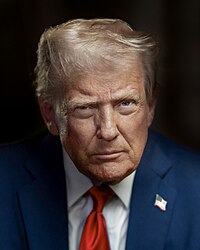
The dominant narrative thread binding April 5th signals is the structural contradiction between announced ceasefire frameworks and their rapid operational collapse. The Hormuz Strait Vessel Transit signal (score: 0.98) reports supertanker acceleration and Trump administration claims of 'successful opening' coinciding with US-Iran talks in Islamabad—seemingly positive for oil markets and risk-off sentiment. Yet CBS News and Channel News Asia reporting simultaneously document Trump issuing profanity-laden ultimatums threatening Tuesday strikes on Iranian power plants and bridges, with cryptic deadline extensions suggesting negotiations remain contingent on Iranian capitulation rather than mutual de-escalation. This contradiction—diplomatic theater masking continued military coercion—has fractured market confidence and exposed the ceasefire as tactical pause rather than strategic reset.
The NATO alliance fracture signal (score: 0.70) crystallizes transatlantic strategic divergence now materializing in real time. European Union member states are refusing to grant US military base access, explicitly rejecting the Trump administration's Iran strategy framework. This rejection occurs precisely when tanker positioning (score: 0.70) suggests administration confidence in Hormuz normalization and crude exports to US ports—implying Europe views the US escalation posture as unilaterally destabilizing rather than protective. The basing dispute directly constrains US force projection capabilities in Eastern Mediterranean theaters where Israel faces renewed missile threats (Haifa building strike reports, UAE/Kuwait air defense activations), creating a critical vulnerability window should Iran-backed proxy escalation resume.
Energy sector strain cascades are now measurable across Global South economies despite headline ceasefire implementation. India's Reliance fuel rationing (score: 0.79)—capping sales to $11 per customer—reflects structural supply shortages persisting despite ceasefire frameworks. Simultaneously, Hindustan Times reports Indian airlines have cancelled over 10,000 flights since February 28, directly tied to West Asia conflict spillover. OPEC+ symbolic oil hike announcements now appear inadequate to offset both structural supply disruptions and demand destruction from aviation collapse. The 1.20% SENSEX surge masks underlying energy cost inflation that will suppress GDP growth across India's consumption-dependent economy; longer-duration market consequences favor energy-hedged sovereigns (China +1.54% CSI 300, Japan +1.84% Nikkei) over energy-importing equity markets.
◈ THE POWER INDEX
Track every world leader, corporation and nation with live influence scores, signal history and network maps.
OPEN THE INDEX →
Free access · No sign-in required
Ukraine's Orthodox Easter ceasefire violation (score: 0.79)—two building attacks in Kherson Region during religious holiday pause—signals that both Moscow and Kyiv treat announced truces as tactical breathing rooms rather than durable settlements. The timing is strategically significant: Zelensky's Damascus visit pushing military deals with Syria's new leadership indicates Ukraine is hedging against ceasefire durability by securing new proxy supply chains. Medvedev's bioweapon accusations (score: 0.61) accompanying these violations follow Russia's historical pattern of accusation escalation preceding renewed kinetic operations. The signal cluster suggests military commanders on both sides have rejected political ceasefire frameworks, positioning for renewed high-intensity operations post-Easter. Capital markets should price in renewed volatility within 72-96 hours as diplomatic window closes.
Trump's geopolitical messaging is increasingly divorced from observable market mechanics, creating alpha opportunities for positioned capital. The empty tanker wave celebration (score: 0.70) and Hormuz reopening optimism contrast sharply with: (1) NATO base refusals constraining military leverage, (2) Ukrainian ceasefire violations suggesting proxy conflict endurance, (3) Cuban defiance (score: 0.61) maintaining anti-blockade stance despite sanctions threats, and (4) African leadership criticism—Senegal PM explicitly naming Trump administration as 'destabilizing force' (score: 0.68). This polycrisis positioning suggests markets are pricing ceasefire success prematurely; Bitcoin's -2.52% decline and Dow Jones' -0.56% underperformance indicate institutional capital is rotating away from risk-on energy/geopolitical normalization trades.
Xi Jinping's Taiwan hardline messaging (score: 0.67)—framing independence as security threat during first opposition party cross-strait talks in a decade—overlaps with US diplomatic overextension across Iran, Ukraine, and NATO simultaneously. This simultaneity is not coincidental: Chinese strategic doctrine favors testing US resolve when American power is diffused across multiple theaters. The first cross-strait opposition talks in ten years suggest Beijing believes geopolitical windows are opening; paired with Hong Kong's AI research institute acceleration (score: 0.88) amid 'AI for All' strategy, China is signaling technological decoupling from Western systems while positioning for cross-strait military-technical advantage. US capital markets have not yet priced this Taiwan risk premium adequately; defense contractors and semiconductor exposure should face rotation pressure within 48-72 hours.
Pope Leo's Easter Sunday peace call carries symbolic weight in this moment of ceasefire collapse. Religious holiday violation (Ukraine), defiant Cuban stance, and escalating Middle East missile exchanges during Christian observance collectively signal that institutional restraint mechanisms—diplomatic norms, religious authority, international law—are eroding simultaneously. Geopolitical actors are increasingly willing to violate established behavioral boundaries (NATO bases, Easter truces, biolab treaties) because they perceive the rules-based order as already collapsed. This perception itself becomes self-fulfilling: capital withdraws to safe havens (Yen strength embedded in Nikkei surge), sovereign borrowing costs rise (reflected in Bitcoin decline as inflation hedge weakens), and energy price volatility increases despite headline supply improvements.
The signal architecture reveals a primary US administration credibility crisis. Trump's simultaneous messaging (Hormuz optimism + Iran strike threats) mirrors his strategic communication pattern of negotiation through public contradiction, which works tactically in bilateral deals but fails catastrophically in multilateral alliance management. European base refusals indicate NATO has effectively called the administration's bluff on Iran strategy; China's Taiwan testing indicates Beijing judges US focus diffusion as exploitable; Iran's continued proxy activity indicates Tehran assesses ceasefire durability as temporary. Each actor's rational response to signaled unreliability creates a cascade of de-escalation reversals. By April 7-8, market pricing should reflect not Hormuz opening success but rather elevated geopolitical risk premium across all equity indices except energy and defense sectors.