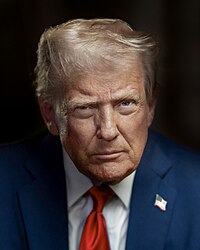
The dominant narrative on April 7, 2026 centers on a critical binary pivot: Trump administration negotiators have secured a two-week ceasefire suspension with Iran conditioned on immediate Strait of Hormuz access normalization—a structurally fragile agreement that nevertheless unlocked synchronized risk-on repositioning across global markets. Oil prices collapsed 18% on the announcement (MarketWatch), with Brent crude expectations moderating from EIA's Q2 peak forecast of $115/barrel, while equity indices surged across Asia (Nikkei +1.84%, CSI 300 +1.54%, SENSEX +1.20%, Bovespa +1.12%) reflecting capital flight from safe havens. The dollar weakened as carry trade appetite returned, yet Bitcoin dropped 2.51%—a divergence suggesting institutional investors distinguishing between cyclical risk appetite and structural uncertainty. This is not a durable peace framework; it is a volatility compression trade with explicit expiration built in.
Parallel humanitarian catastrophe in Lebanon (signal score 0.98) now operates as a collateral pressure mechanism on the Trump-Iran negotiation timeline. Beirut hospitals face complete operational breakdown following intensive Israeli strikes, with survivor accounts describing overwhelming destruction that has triggered World Food Programme humanitarian mobilization and implicit Pentagon contingency planning. The Vatican's escalation—Pope Leo XIV's ecclesiastical pressure for immediate ceasefire (score 0.98)—represents institutional legitimacy pressure on Israeli operations at precisely the moment Tehran has accepted negotiation constraints. This creates asymmetric diplomatic leverage: Iran can frame the Strait opening as a humanitarian gesture toward Lebanese civilians, while simultaneously constraining Tel Aviv's operational tempo through both US conditionality and Vatican-amplified moral authority. The France-referenced entity signal suggests Paris may coordinate humanitarian corridor deployment as part of broader ceasefire architecture.
Pakistan's declaration of a two-day holiday ahead of US-Iran talks in Islamabad (emerging signal, score 0.75) indicates this is not a bilateral negotiation but a structured multilateral diplomatic event with active Chinese and UN participation (per entity references). Islamabad's government-wide mobilization suggests confidence in productive talks, though Delhi Police's concurrent arrest of a Bhubaneswar man over suspected terror links (score 0.90) signals that South Asian security frameworks remain fragile despite ceasefire implementation. The implicit message: regional actors are hedging against negotiation failure by maintaining counter-terrorism operational tempo. This two-track posture—diplomatic escalation paired with security tightening—is standard pre-agreement behavior indicating parties expect asymmetric interpretation of final terms.
◈ THE POWER INDEX
Track every world leader, corporation and nation with live influence scores, signal history and network maps.
OPEN THE INDEX →
Free access · No sign-in required
Domestic ideological consolidation signals in Washington (Trump's 'One Nation Under God' monument project, score 0.98) operate as counterbalance to Iran negotiation optics. The administration is simultaneously signaling to its domestic base that religious nationalism remains ascendant while negotiating with a theocratic adversary—a rhetorical positioning that limits Trump's concession ceiling and creates domestic political constraints on any expanded agreement beyond the two-week framework. This dynamic mirrors the UK Police mass arrests at Palestine Action protests (523 detained, score 0.91), where law enforcement is tightening demonstration restrictions despite ongoing US-Iran ceasefire talks—suggesting Western governments are managing internal dissent precisely because the regional conflict remains active and any expanded agreement framework could trigger domestic opposition mobilization.
The bond market crisis signal (score 0.75) reveals financial sector exposure to binary escalation: JPMorgan is explicitly advising hedging strategies for Trump's Iran deadline outcome, indicating institutional capital is positioned for volatility recompression on April 14 (the two-week expiration). The current market relief is not confidence in durable settlement but rather liquidity reallocation into duration and equities ahead of known decision point. This creates a structural vulnerability: if Strait of Hormuz access proves insufficient or Iran maintains contested interpretation of terms, the market repricing will be violent and synchronized. Federal Reserve posture becomes critical—any signal of rate flexibility in response to geopolitical stress could amplify volatility compression.
India's escalation of diesel and jet fuel export duties (Rs 21.5/L to Rs 55.5/L, score 0.93) operates as a hedging mechanism against oil price uncertainty: New Delhi is capturing revenue upside from the current price environment while simultaneously constraining global aviation fuel supply—a position that benefits if oil prices revert upward post-April 14. Cathay Pacific's referenced entity status suggests Asian carriers are absorbing cost pressures, creating downstream margin compression in the region even as equity markets rally. This is a critical asymmetry: energy cost inflation persists at the consumer level while financial markets price in energy deflation, suggesting real economy dislocation in Q2 2026.
The Istanbul Beşiktaş terror attack investigation (16 detained, score 0.71) and concurrent Turkish security escalation suggest that Sunni-Shia proxy competition in the Eastern Mediterranean continues operating at tactical level despite strategic ceasefire framework. Turkey's counter-terrorism posture indicates Istanbul retains independent intelligence assessment of regional threat environment—a form of hedging that implies Turkish leadership expects Iran ceasefire to be partial and localized rather than comprehensive. The Israeli-referenced entity in the terror signal suggests potential Sunni-Israeli alignment coordination beneath diplomatic surface, reinforcing the assessment that this is a bilateral Iran-US pause, not a comprehensive regional settlement.
The UK's criminal charging of a Sudanese man in Channel boat crossing deaths (score 0.98) and concurrent Australian Greens escalation against Israeli operations (score 0.69) represent divergent Western responses to overlapping humanitarian crises: Anglo-sphere security prioritization versus European-aligned progressive opposition. This fragmentation in Western coalition posture weakens collective leverage on Iran and Israel simultaneously, suggesting the Trump administration is negotiating from a position of internal Western disagreement about regional priorities. The migration crisis signal implies European humanitarian burden is shifting political calculations toward de-escalation, creating implicit pressure on Paris and Brussels to support Strait access normalization as path to broader stability.