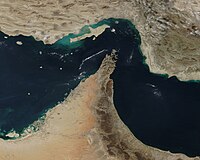
Strait of Hormuz
STRAIT OF HORMUZ INTELLIGENCE DOSSIER
The Strait of Hormuz is a maritime chokepoint between Iran and Oman controlling approximately 21 percent of global petroleum transit. As a geographic entity rather than a political actor, its significance derives from Iran's capacity to restrict flow through contested waters—a leverage point that directly impacts energy markets, geopolitical alignment, and US-China competition for regional influence. The waterway represents the nexus where energy security, naval power projection, and Middle Eastern stability converge, making disruption scenarios existential concerns for global markets.
The Strait of Hormuz maintains monitored status on the LeadersCartel Power Index at rank 29 with a stability score of 5.3, tracked across 2324 intelligence sources. Signal distribution registers 14 high-impact events, 5 emerging developments, and 0 watch-level concerns, indicating sustained but contained volatility. The rank reflects neither rising destabilization nor meaningful de-escalation—rather, a plateau state where Iran's capacity to create friction remains elevated while actual blockade risk remains constrained. This positioning suggests structural tension without acute crisis indicators.
Recent signals reveal escalating political rhetoric alongside measurable shipping impacts. Trump administration statements characterizing Iranian stewardship as "very poor job" with "dishonourable" conduct correlate with reported ship traffic declines, signaling downstream economic consequences from diplomatic posturing. Concurrent US Navy transits near Islamabad coordination discussions, paired with Iranian denials of corridor accessibility, create information warfare layers obscuring actual maritime conditions. Pete Hegseth's high-profile awkward moment regarding corridor status signals potential policy inconsistency within Trump administration communications.
Analysts should monitor Iran's next operational response to increased US naval presence within 72 hours. Watch for commodity price reactions to any new transit restrictions or naval incidents. The specific trigger event warranting escalation protocols: any Iranian seizure of commercial vessels, which would break the current signal equilibrium and likely move the entity's rank sharply upward.