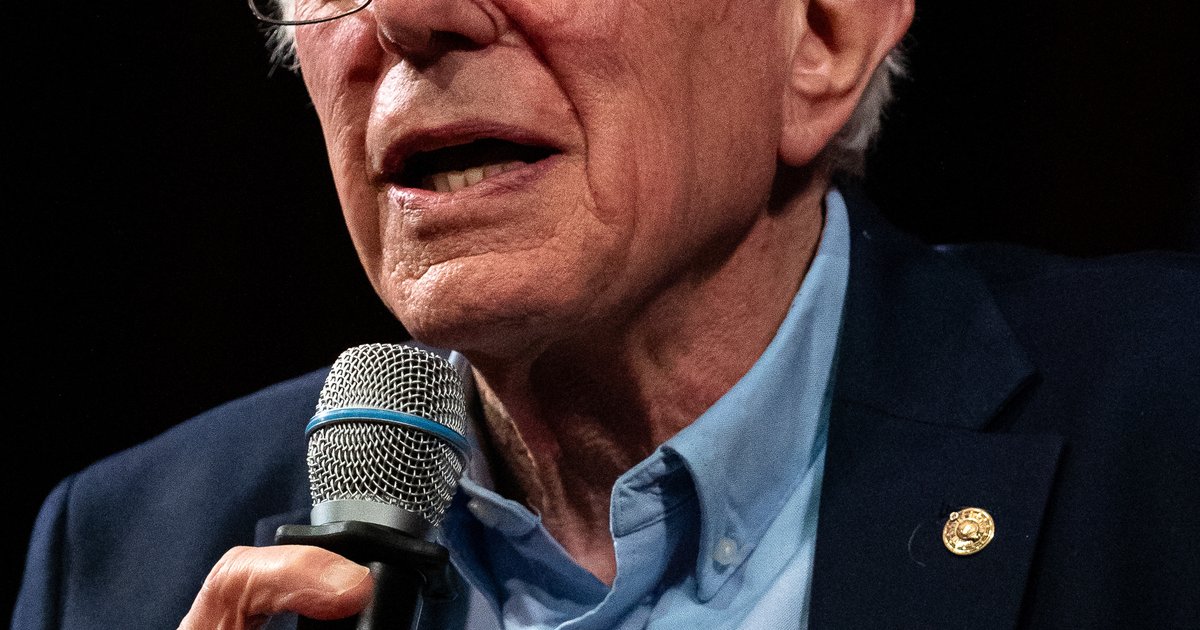
Bernie Sanders
INTELLIGENCE DOSSIER: BERNARD SANDERS
Bernie Sanders is a United States Senator and longtime progressive political figure whose current influence centers on congressional oversight of emerging technology policy. As an independent senator from Vermont holding significant seniority on relevant committees, Sanders functions as a critical pressure point on artificial intelligence regulation, wielding disproportionate influence over Democratic-led legislative initiatives despite his rank-72 position on the LeadersCartel Power Index. His strategic significance derives from bridging populist and institutional concerns regarding corporate concentration in AI development, positioning him as a counterbalance to pro-business technology frameworks within the current 47th Administration led by President Donald Trump.
Sanders' LeadersCartel ranking of 4.8/100 reflects monitored-tier tracking across 220 active intelligence sources with signal distribution favoring high-impact developments (1H) and emerging narratives (2E). His position remains stable rather than ascending, indicating consistent but non-explosive influence. The senator's power derives from legislative leverage and media amplification rather than executive authority, explaining his moderate score despite significant agenda-setting capacity on technology policy. His "monitored" classification suggests sustained intelligence collection on his coalition-building activities.
Recent signal activity confirms Sanders' elevation of AI governance to mainstream political discourse. His joint statement with Steve Bannon demanding tighter AI controls, amplified across multiple outlets under the "pro-human" summit framing, represents unusual cross-ideological coalition-building that elevated discourse beyond typical partisan lines. Congressional testimony regarding oversight gaps—framed as Congress being "asleep at the wheel"—directly pressured Executive Branch regulators and created documented legislative demand signals. These developments linked Sanders to Anthropic, Microsoft, and broader China-competitive narratives.
Analysts should monitor Sanders' legislative committee positioning over the next 48-72 hours, particularly any markup sessions or subpoena activity targeting technology sector executives. The specific trigger event to watch is whether his AI oversight provisions gain attachment to broader appropriations legislation, which would signal institutional power consolidation beyond current ranking metrics and force Trump Administration engagement on technology regulation.