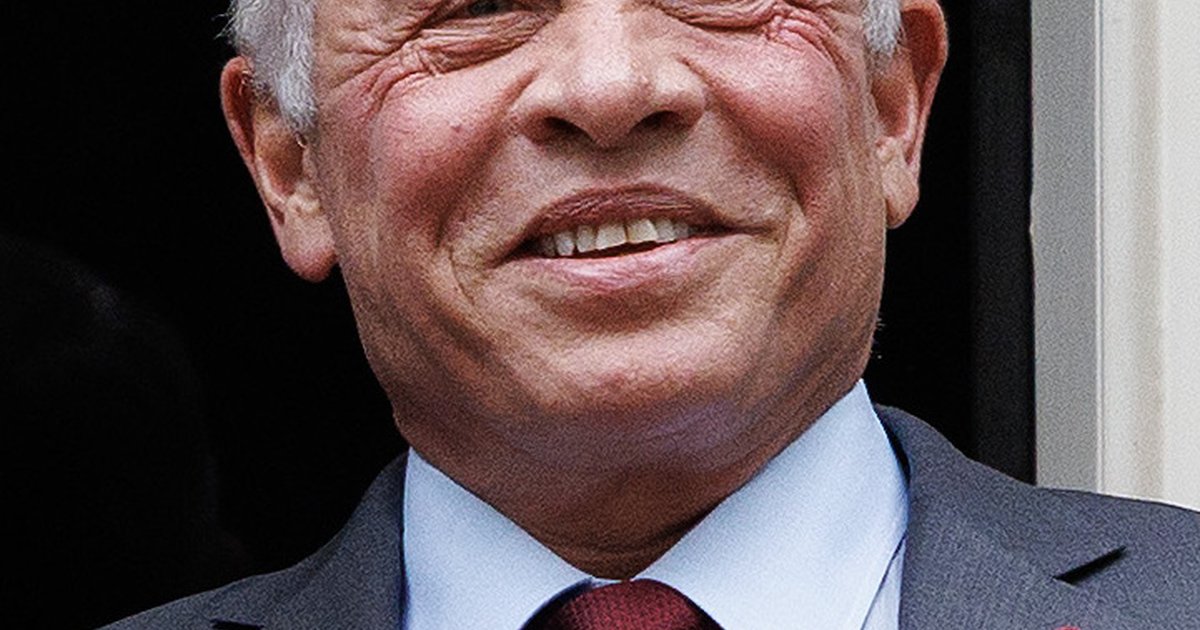
King Abdullah II
INTELLIGENCE DOSSIER: KING ABDULLAH II OF JORDAN
King Abdullah II is the reigning monarch of the Hashemite Kingdom of Jordan, a critical U.S. regional ally and custodian of Islam's third-holiest site. As current head of state since 1999, Abdullah maintains direct control over security apparatus, foreign policy, and domestic stability across a nation hosting over 5.4 million residents, including nearly 2 million Palestinian refugees. His strategic significance derives from Jordan's geographic position between Israel and Syria, its role as a primary stabilization anchor for the broader Levant, and his personal credibility within both Western capitals and Arab publics—a rare combination that makes him indispensable to U.S. Middle East strategy under the Trump administration.
Abdullah currently ranks 150th on the LeadersCartel Power Index with a composite score of 2.2, tracked across 266 active intelligence sources with signal distribution weighted 1H/0E/0W, indicating sustained high-impact monitoring across his monitored tier classification. His stable but moderate ranking reflects his constrained capacity relative to peer nation-states: while Abdullah wields substantial regional diplomatic influence, he operates within the structural constraints of a resource-limited kingdom dependent on external security partnerships. The signal profile suggests consistent but non-volatile activity—neither rising prominence nor declining relevance, but rather steady-state strategic value to Western interests.
Recent signals capture Abdullah's active diplomatic posture on critical flashpoints. His ordering of security forces to respond firmly to the Karak Church incident demonstrates direct crisis management of sectarian tensions that threaten regime stability. Simultaneously, his state visit to Malaysia signifies strengthening non-Western partnerships outside traditional U.S.-aligned frameworks, while his UN statement characterizing Israel's "expansionist appetite" as a regional threat signals public repositioning on Palestinian issues—a calibrated message balancing American alliance obligations with Arab public opinion.
Analysts should monitor Abdullah's next 72 hours for two specific pressure points: (1) statements clarifying Jordan's position following any new Israeli security escalations, and (2) any public communications regarding U.S. Middle East policy coordination with the Trump administration. Watch for divergence between private alignment with Washington and public Arab League positioning as the primary trigger indicating shifting regional calculus.