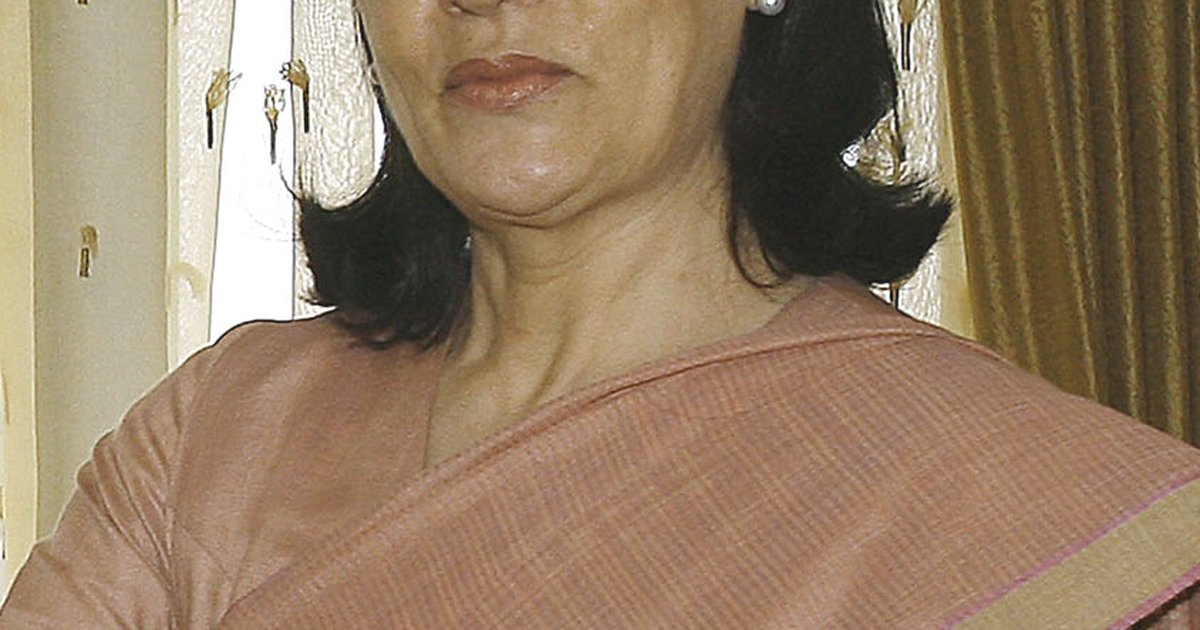
Sonia Gandhi
INTELLIGENCE DOSSIER: SONIA GANDHI
Sonia Gandhi is the chairperson of the Indian National Congress party and a senior opposition figure in India under Prime Minister Narendra Modi's government. As the widow of assassinated former PM Rajiv Gandhi and mother of current Congress leader Rahul Gandhi, she remains a symbolic and operational force within India's primary opposition bloc. Her strategic significance derives from her ability to coordinate multi-party opposition messaging on domestic governance failures and India's international posture, particularly on humanitarian crises where the Modi administration faces criticism for perceived inaction or selective outrage.
Gandhi maintains a monitored tier position at rank 190 with a LeadersCartel Power Score of 1.9 across 67 tracked intelligence sources. Her signal distribution shows one emerging signal and one watch-category signal, indicating stable but limited immediate impact on global power structures. This ranking reflects her primarily domestic Indian influence rather than direct geopolitical leverage, though her statements carry weight within opposition-coordinated narratives that occasionally influence bilateral perceptions of India's democratic health.
Recent developments show Gandhi actively mobilizing opposition unity. She joined fellow opposition MPs in parliamentary protests against the Modi government, demonstrating tactical coordination on domestic governance issues. Simultaneously, she authored an article criticizing the government's silence on Gaza while questioning selective humanitarian concern, directly challenging Modi's diplomatic positioning. The BJP counterattacked with coordinated messaging, noting perceived hypocrisy regarding religious minorities in Bangladesh—signaling this critique extends beyond Gaza into broader India-Pakistan regional tensions and Hindu-Muslim communal narratives.
Over the next 72 hours, analysts should monitor whether Gandhi coordinates a broader opposition statement on Middle East policy ahead of any Modi administration moves on Palestine recognition. Watch for whether BJP escalation on the Bangladesh angle forces Congress to clarify its position on Hindu persecution there, potentially fracturing the opposition's messaging coherence. The critical trigger event is any scheduled parliamentary question hour where Gandhi might directly challenge Modi on India's Gaza-Palestine voting record.