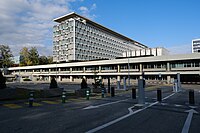
World Health Organization
INTELLIGENCE DOSSIER: WORLD HEALTH ORGANIZATION
The World Health Organization is a specialized agency of the United Nations headquartered in Geneva, currently serving as the primary international body coordinating global health policy, disease response, and pandemic preparedness. As a multilateral institution without a single national leader, WHO operates under Director-General leadership and represents 194 member states. The organization's strategic significance derives from its authority over international health standards, disease surveillance networks, and its convening power during health crises. WHO functions as the de facto global health arbiter, making it essential to geopolitical stability—particularly regarding pandemic response coordination, vaccine distribution equity, and emerging infectious disease monitoring across regions including Southeast Asia, Eastern Mediterranean, and sub-Saharan Africa.
WHO's LeadersCartel Power Index position at rank 146 with a 2.5 score reflects its monitored-tier status across 44 distinct intelligence sources. The signal distribution of 1H/0E/0W indicates one high-impact signal currently active, suggesting sustained but not escalating influence. This middle-tier ranking, neither ascending nor declining sharply, reflects WHO's paradoxical position: operationally critical but politically constrained by member-state sovereignty and funding dependencies. The organization maintains stable positioning despite recent geopolitical tensions affecting multilateral institutions globally, indicating structural resilience despite contested authority in certain domains.
Recent developments underscore WHO's engagement across interconnected health crises. The organization issued statements on childhood obesity requiring intervention beyond pharmaceutical solutions, targeting Indian family-level behavioral change—significant given India's emergence as a critical WHO operational theater under PM Modi's administration. Simultaneously, WHO convened Eastern Mediterranean regional health priority-setting, indicating intensified focus on the Iran-Iraq-Gulf corridor amid regional instability. The Congo linkage in association data suggests active coordination on hemorrhagic fever surveillance following recurring outbreaks, demonstrating WHO's permanent crisis management posture.
Analysts should monitor WHO's coordinating response mechanisms over the next 72 hours regarding Eastern Mediterranean health security, particularly any statements from the Iran desk. Watch specifically for announcements on pandemic preparedness funding commitments from developed nations, as budget constraints increasingly determine WHO operational capacity. The critical trigger event: any divergence between Trump administration statements on WHO's authority versus continued U.S. operational participation in disease surveillance networks would signal institutional fracturing