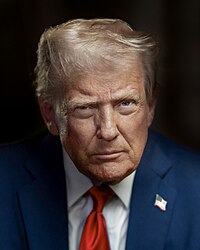
Donald Trump pressed NATO Secretary-General Mark Rutte on allied defense contributions during talks this week, expressing disappointment with Britain, Spain, Italy, France, and Germany for what he characterized as insufficient military spending. The confrontation signals widening friction between Washington and its most established allies precisely as the Pentagon escalates regional operations against Iran. The timing marks a shift from alliance-building toward unilateral posturing on two fronts simultaneously.
Trump's criticism centers on a core strategic complaint: major NATO members are not bearing proportional costs in a multipolar security environment. According to Al Jazeera reporting on June 23, Trump told Rutte during their discussion that the allies are underperforming on defense commitments while relying on American power projection. This framing reflects a longer-term US position but carries immediate weight now that Rubio's team is simultaneously securing bilateral backing from Gulf states on Iran operations—a move that sidelines formal NATO structures in favor of ad-hoc coalitions.
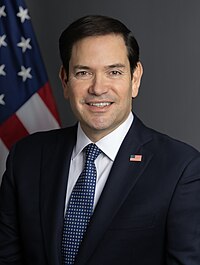
The Iran escalation is widening the crack. Secretary of State Marco Rubio has been in Bahrain securing Gulf cooperation on nuclear inspections and uranium removal, a $672 million initiative aimed at constraining Tehran's program. Defense News reported the push involves direct pressure on regional players to join a containment effort without requiring formal NATO involvement. Trump has simultaneously questioned Pentagon targeting decisions in briefings, creating internal policy contradictions that suggest the administration is unclear on unified doctrine even as it demands allied contributions elsewhere.
Five European military powers—convening ahead of the NATO summit to coordinate Ukraine strategy—are now absorbing a second message: Washington expects burden-sharing on new fronts while questioning its own tactical choices. To be sure, White House officials maintain the criticism reflects operational discretion and an expectation of genuine allied commitment, a position that aligns with prior budget-based complaints. Yet the simultaneous push into bilateral Gulf arrangements, outside NATO's institutional framework, signals that Washington is building parallel structures rather than strengthening the alliance itself. This appears to be a shift toward transactional partnerships over collective defense commitments.
The strategic consequence is a narrowing of allied leverage at a moment when Europe needs it most. NATO's credibility on Russia accountability—already strained by UN dysfunction on civilian targeting investigations—now faces a third pressure: an American president signaling that alliance membership itself may be conditional on military spending rather than a binding collective commitment. The UK, France, Germany, Italy, and Spain collectively field substantial militaries, yet Trump's framing reduces them to fiscal debtors rather than strategic partners. European capitals are reading this as a warning that transatlantic architecture cannot be taken as given.