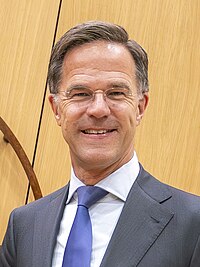
Mark Rutte
INTELLIGENCE DOSSIER: MARK RUTTE
Mark Rutte is the Secretary General of NATO, the world's preeminent military alliance, holding the highest diplomatic-strategic position within the 32-member organization. As NATO chief, Rutte serves as principal spokesperson and coordinator for collective defense policy during an era of renewed great-power competition. His significance derives from direct influence over alliance positioning toward Russia, China deterrence strategy, and intra-European security coordination—roles that touch every major geopolitical flashpoint from Ukraine to the Taiwan Strait. Rutte's appointment in October 2024 followed his tenure as Prime Minister of the Netherlands (2010–2024), making him a veteran insider of European institutional politics with deep relationships across Western capitals.
The LeadersCartel Power Index tracks Rutte at rank 128 with a normalized score of 2.8, positioned within the monitored tier across 18 active intelligence sources. Signal distribution shows two emerging (E) indicators and zero high-impact (H) flags, suggesting elevated but not crisis-level activity. This placement reflects stable baseline influence tempered by constraints inherent to NATO's consensus-dependent structure. Unlike executive heads of state (Trump, Macron, Xi), Rutte operates through coalition management rather than unilateral authority, placing natural ceilings on individual power projection. His rank stability indicates sustained relevance without momentum shifts.
Recent signals capture Rutte pursuing active damage control on NATO cohesion amid Trump administration skepticism toward burden-sharing commitments. The "Teflon Rutte" framing highlights his reputation for political survival and consensus-building at the precise moment alliance unity faces stress. Concurrent reporting on Russian culpability ("almost sure" attribution language) demonstrates Rutte navigating evidentiary thresholds in conflict communication. Most notably, the peace prize ceremony incident—where Rutte and German Chancellor Friedrich Merz faced public backlash—signals reputational friction, possibly reflecting constituencies unhappy with perceived militarism or insufficient diplomatic initiatives toward conflict resolution.
Analysts should monitor Rutte's messaging intensity toward Moscow over the next 72 hours, particularly whether NATO issues new strategic communications on Ukraine or Article 5 posture. Watch for any bilateral signals between Rutte and Trump administration officials regarding defense spending benchmarks. The critical trigger