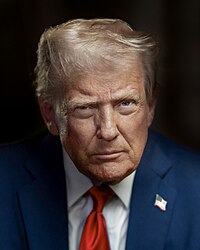
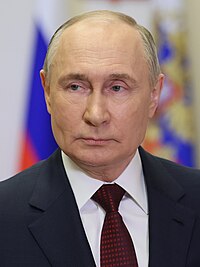
Donald Trump has intensified pressure on NATO Secretary General Mark Rutte ahead of this week's alliance summit, demanding European defense spending validation and signaling a willingness to negotiate directly with Vladimir Putin on Ukraine. The move coincides with the resignation of UK Prime Minister Keir Starmer on July 3, citing personal reasons, deepening governance instability within the Western alliance at a moment of high geopolitical strain. Together, the developments suggest Trump is pursuing a strategy of bilateral leverage that circumvents traditional alliance consensus-building.
Trump's demands on Rutte center on forcing NATO members to publicly commit to defense spending targets before the summit proceeds, according to reporting from Politico on July 3. The pressure marks a departure from the alliance's post-Cold War consensus-building model. By conditioning summit momentum on individual state commitments, Trump is shifting from collective framework negotiation to bilateral sales-pitch dynamics. This approach mirrors his strategy of engaging Pakistan as a diplomatic intermediary for US-Iran talks, signaling preference for channel-specific negotiation over multilateral forums.
Starmer's resignation removes a key interlocutor for the White House at a sensitive moment. The UK Prime Minister had positioned himself as a bridge between Washington and Europe on defence spending and Ukraine policy. His departure, first reported by the BBC on July 3, creates a twelve-week leadership vacuum during critical NATO discussions. Starmer cited intensely personal reasons, but the timing exposes the fragility of European political leadership when Trump is actively reshaping alliance incentives.
Trump's simultaneous engagement with Putin on Ukraine resolution—confirmed through Kyodo News reporting of a July 4 call between the two leaders—signals that the US negotiating team has shifted from enforcing collective Western conditions to exploring bilateral settlement paths. To be sure, Trump has stated his engagement reflects a desire to end the conflict and preserve NATO cohesion, a position his officials continue to emphasize. Yet the strategic reality is that direct US-Russia talks reduce Europe's leverage over final outcomes and increase incentives for individual NATO members to hedge their own positions.
The pattern across signals—NATO leadership pressure, UK political fracture, US-Pakistan-Iran intermediary diplomacy, and Trump-Putin bilateral engagement—reflects a coherent shift in American alliance management. Rather than reinforcing collective frameworks, Trump is deliberately widening bilateral channels and demanding individual compliance metrics. This creates structural advantage for Washington in near-term negotiations but erodes the institutional discipline that has anchored the transatlantic alliance for seventy years. European leaders must now navigate both Trump's direct demands and the absence of coordinated allied response.
The market consequence is emerging as a repricing of geopolitical risk rather than immediate capital reallocation. Silver and gold surged on July 3 (up 3.58% and 1.81% respectively), signaling investor flight toward safe havens amid alliance uncertainty. This suggests traders are pricing sustained volatility in transatlantic coordination, which typically widens commodity hedging demand and narrows appetite for cyclical exposure in Europe-dependent sectors. The fracturing alliance is producing precisely the kind of structural uncertainty that drives precautionary capital positioning.