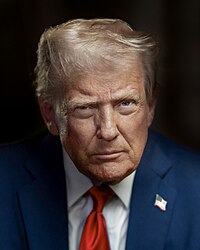
The Trump administration threatened fresh tariffs against India on July 28 even as three Federal Reserve officials pushed for a rate increase, deepening policy fractures within the US government. The moves arrived as Israel accused Hezbollah of violating a fragile ceasefire in southern Lebanon, signaling the collapse of a key regional security arrangement. Taken together, the developments reflect a shift toward unilateral policy pressure—on trade, monetary tightening, and regional deterrence—that is splintering consensus among US officials and destabilizing the assumptions on which allied governments have built their economic strategies.
Trump maintained tariff threats against India despite rising voter backlash in Michigan and other swing states, according to reporting by the Wall Street Journal on July 28. The decision to press ahead on India tariffs comes as the administration simultaneously pursues broader trade restrictions against China, signaling that protectionist policy will not yield to electoral pressure. White House officials have framed the India tariffs as necessary to rebalance the US-India trade relationship and counter what they describe as unfair market access practices, a position the administration maintains reflects national economic interest rather than short-term political calculation.
At the Federal Reserve, policy cohesion is visibly eroding. Three board members dissented from the decision to hold rates for a fifth consecutive meeting, publicly pushing for an increase, according to Bloomberg reporting on July 28. The dissent signals doubt about the Fed's dovish posture amid persistent inflation uncertainty, and the split has triggered volatility in treasury markets as traders reprice expectations for late-2026 rate decisions. Fed Chair Jerome Powell and the majority held firm on the hold decision, but the public fracture undermines the appearance of institutional unanimity and creates policy uncertainty at a moment when capital markets are already sensitive to inflation signals.
In the Middle East, Israel escalated tensions on July 28 by accusing Hezbollah of drone attacks on southern Lebanon, a violation of the ceasefire brokered earlier this year. The accusation, reported by Reuters, signals the fragile truce is collapsing under operational pressure from both sides, and raises the risk of a wider regional conflict that would strain US military resources and destabilize energy markets. To be sure, Hezbollah has denied the accusations and framed any Israeli military action as provocation; the ceasefire's collapse appears driven by mutual claims of violation rather than a unilateral decision by either actor.
These three policy fractures—trade dissensus, monetary policy splits, and regional military deterioration—are reinforcing one another and narrowing US negotiating room. Allies in Europe and Asia are now calculating their own hedging strategies in response to both the tariff threats and the visible division within the US government on rates and regional commitment. India is already signaling willingness to retaliate on US agricultural imports; Poland has begun a rightward shift in security policy, pivoting away from full alignment with US-led NATO posture; and Cuba's economic collapse under intensified US sanctions is accelerating, suggesting that unilateral pressure policies are meeting diminishing returns. The result is a contraction, not expansion, of US diplomatic leverage across three critical domains: trade, finance, and regional security.
What unifies these fractures is the absence of coordinated policy restraint. When the Fed splits publicly, when the White House pursues tariffs against electoral pressure, and when military posture hardens despite allied discomfort, the institutional signals to markets and adversaries become contradictory. Capital flows to safety (gold +1.31%, copper +1.58% on session), equity markets contract (S&P 500 -1.52%, Dow -2.19%), and regional actors accelerate military preparations or hedging moves. The policy fractures themselves—not external shocks—are the driver of instability.