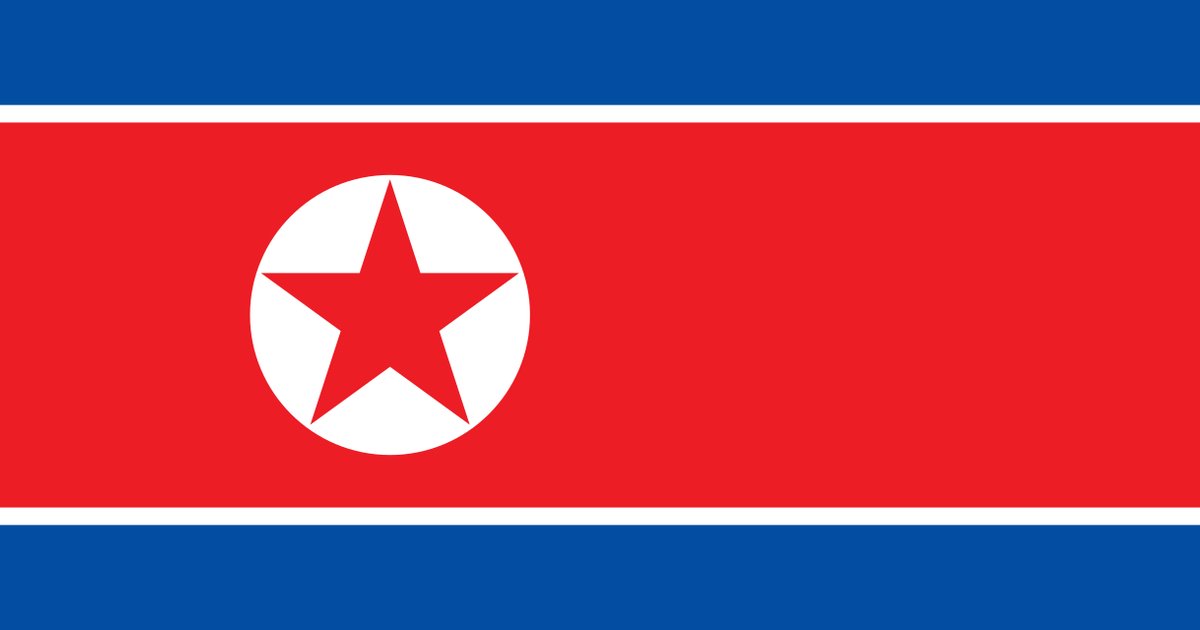
South Korea has formally abandoned its denuclearization-first diplomatic strategy toward North Korea, according to reporting on August 2, effectively accepting Pyongyang's nuclear arsenal as a permanent feature of regional security. The shift marks a decisive break from decades of Seoul policy that conditioned engagement on nuclear disarmament talks. The move reshapes alliance calculations across the Indo-Pacific at a moment when US-China competition is intensifying and Tokyo is already recalibrating its own deterrence posture.
Seoul's strategy change reflects the operational reality that North Korea's weapons program is now advanced enough that denuclearization is no longer a credible near-term objective. Nikkei Asia reported on August 2 that South Korean defense officials have begun framing nuclear capability as a fixed constraint rather than a negotiable variable in security planning. This marks a doctrinal departure: previous administrations, including Moon Jae-in's, pursued engagement partly on the premise that dialogue could eventually lead to disarmament. The new stance eliminates that premise entirely, shifting Seoul's focus instead to deterrence, containment, and alliance coordination with Washington and Tokyo.
The timing amplifies the strategic significance. Japan is simultaneously moving away from its own pacifist security constraints, increasing defense spending and deepening military integration with the United States. According to Reuters reporting from late July, Tokyo has begun joint contingency planning for Taiwan scenarios—planning that assumes a nuclear-armed North Korea as a complicating factor. South Korea's formal acknowledgment of this reality creates a unified front among US allies in East Asia: all three powers are now organizing deterrence architectures around the assumption that North Korea retains nuclear weapons indefinitely.
China and Russia are observing this shift closely. To be sure, Beijing has consistently opposed US extended deterrence in the region and framed deeper US-Japan-South Korea coordination as destabilizing. Yet the strategic effect of Seoul's move is to lock in that coordination rather than contest it—signaling to Washington and Tokyo that Seoul's security future is now bound to collective alliance frameworks, not bilateral diplomacy with Pyongyang. This removes a degree of flexibility Beijing might have exploited by offering Seoul alternative diplomatic channels.
The implications extend beyond the peninsula itself. South Korea's acceptance of North Korean nuclear capacity removes a residual source of daylight between Seoul and Washington on alliance strategy. For the Trump administration—which has shown willingness to transact directly with Pyongyang—the move clarifies that South Korean security policy is now less dependent on US-North Korea détente and more dependent on US-led regional deterrence. This is the opposite of what a negotiation-first approach would produce. The decision suggests that Seoul is placing a structural bet: that sustained nuclear deterrence and allied coordination offers better security than the diplomatic gamble of past decades.
The regional balance shifts as a consequence. North Korea retains strategic ambiguity—it can still signal willingness to talk—but Seoul has removed the incentive structure that once made disarmament a core objective. This narrows the diplomatic runway and increases the weight placed on military posture, force modernization, and alliance exercises. For Tokyo and Washington, it confirms that East Asian security architecture is now organized around explicit multipolarity: the US and its two key allies are building deterrence networks that assume both Chinese rise and permanent North Korean nuclear capacity. The question is no longer whether North Korea will give up its weapons. The question is how allied forces will operate in a region where it does not.