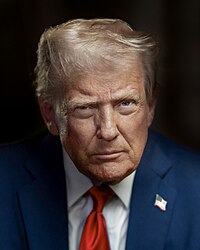
Iran publicly warned nations on August 21 against joining the Trump administration's sanctions coalition, threatening adversarial status for participants. The move marks a sharp escalation from Tehran's previous diplomatic overtures and signals a strategic pivot toward China and Russia as primary economic partners. The declaration comes as the White House seeks to rebuild a coordinated sanctions regime similar to the 2015 pre-deal alignment.
Foreign Minister Abbas Araghchi told reporters that countries choosing to participate in what he called an 'economic D-Day' would face consequences, according to state media reports on August 21. The rhetoric represents a departure from Tehran's cautious approach to US pressure in prior months and signals a calculation that Moscow and Beijing offer sufficient economic cover to absorb sanctions friction. Araghchi's language—framing participation as a binary choice rather than negotiable—suggests Iran is testing whether regional actors will tolerate explicit coercion in choosing economic partners.
The timing aligns with deeper strategic positioning. According to Reuters reporting on developments in the Gulf, Iran has been quietly reorganizing its crude export channels through Chinese refiners and expanding financial settlement mechanisms with Moscow outside the SWIFT system. The shift accelerates a trend visible since 2023 but represents the first overt political threat to countries considering compliance with US enforcement. Saudi Arabia, the UAE, and Iraq—all facing potential sanctions pressure themselves—now face explicit pressure from Tehran to remain neutral or risk isolation.
To be sure, the Trump administration maintains that coordinated pressure on Iran's energy sector and financial networks remains the most effective tool for constraining regional behavior, and White House officials argue that prior administrations' failure to sustain multilateral coalitions allowed Tehran to evade enforcement. However, Iran's public ultimatum appears designed to test whether Beijing and Moscow will publicly affirm their economic commitment, effectively signaling to fence-sitters that the US sanctions architecture is increasingly fragile.
The strategic implication is sharper than the immediate trade loss. By forcing countries to choose between US access and Iranian toleration, Tehran is accelerating a parallel financial system centered on alternative currencies and non-dollar settlement. This is not new behavior; what is new is the overt political confrontation. Al Jazeera reported on August 20 that Iran's Central Bank has issued guidance to state-owned enterprises to minimize dollar holdings and increase settlement in yuan, rubles, and dirhams. The policy suggests Tehran expects sustained sanctions and is preparing an economic operating model for that reality, rather than signaling willingness to negotiate.
The effect is visible in capital repositioning. Uranium prices surged 5.09% on August 21, reflecting trader expectations that Iran-aligned nuclear activity will accelerate if economic isolation deepens. Chinese equity indices rose modestly (Hang Seng +1.21%), signaling market confidence that Beijing will absorb Iranian oil and gas flows at favorable pricing. The moves suggest capital markets are pricing a structural shift in bilateral relationships away from Western-centered financial systems.