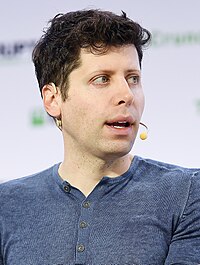
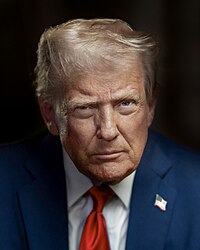
OpenAI chief Sam Altman identified two systemic vulnerabilities in artificial intelligence development on September 13, signaling growing internal US concern about uncontrolled AI advancement even as the Trump administration halts H-1B visa processing and the Pentagon invests $450 million in tungsten supply to counter Chinese technological leverage. The collision of safety alarms and strategic decoupling now frames the Taiwan defense conversation: allied partners are reinforcing the island's security posture precisely because Beijing's AI capabilities are reshaping weapons systems faster than Western governance can adapt.
Altman's warning, first reported by Reuters, identified AI's concentration risk and misalignment hazards as dual threats to development velocity. The acknowledgment carries weight because OpenAI remains the de facto US government AI counterweight to Chinese state-backed systems — and Altman is signaling that the private sector cannot self-regulate at scale. This is a break from Silicon Valley's prior posture. To be sure, conservative commentators including Larry Kudlow have framed AI safety warnings as Democratic electoral strategy, a position that captures the core Trump-era skepticism. But the fact that Altman felt compelled to surface systemic risk to reporters suggests internal pressure is mounting, whether from boards, regulators, or the White House itself.
The Pentagon's $450 million tungsten stake tells a parallel story. According to Defense News reporting, the investment signals that US military planners expect Chinese supply constraints to become a strategic weapon — not a passing friction cost. Tungsten is essential for advanced weapons systems and semiconductor manufacturing. Beijing currently dominates global supply. The move is not incremental; it is a formal commitment to decouple critical mineral flows from Chinese control, a posture that assumes prolonged technological rivalry rather than near-term détente.
Taiwan's defense reinforcement, highlighted by EU envoy signals on September 12, is the visible consequence of this US strategic reorientation. According to Nikkei Asia reporting, allied partners are now explicitly linking Taiwan's security posture to emerging AI-weapons integration timelines. This is new framing. Prior US-Taiwan defense commitments rested on conventional military balance. Now the conversation centers on whether Taiwan's air defense systems can match Chinese AI-integrated attack algorithms — a race that assumes Beijing is advancing faster than the West can sustain countermeasures.
The real strategic tension emerges when you layer these signals: Altman is asking for guardrails; the Pentagon is abandoning trust in supply-chain neutrality; and Taiwan's allies are militarizing against a threat that safety regulators say is not yet fully understood. This is not coherent policy. It is three parallel decisions that each make sense in isolation but collectively signal a US government unsure whether to race or regulate. Microsoft and former President Barack Obama have both called for safety laws in recent weeks, according to multiple outlets. Yet the same administration freezing H-1B visas is explicitly tilting toward speed-over-safety immigration rules in tech. The fracture is structural: the more urgent the China threat feels, the harder it becomes to impose the safety guardrails Altman is warning about.
What emerges is a strategic vulnerability disguised as resolve. Taiwan gets better defenses. But the US commits itself to a weapons race whose governing principles remain contested domestically. Beijing faces no such internal contradiction — state capacity and corporate direction are unified. That asymmetry, not Taiwan's firepower, may prove the decisive factor in the next 18-24 months.