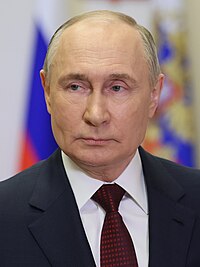
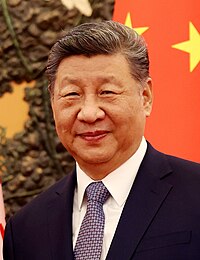
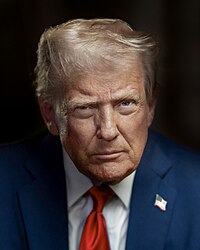
Vladimir Putin confirmed attendance at Xi Jinping's APEC summit in Peru while declining Donald Trump's G-20 gathering, according to Kremlin statements on September 20. The move caps a week of consolidated bloc positioning: China purged two military officials for disloyalty, Lithuania began hardening electrical substations near the Russian border against drone strikes, and Qatar and UAE officials pushed structured Iran-Gulf dialogue. Together, the signals reflect a hardening of two opposing alliance structures—one centered on Beijing and Moscow, the other on Washington and NATO—with diminishing middle ground.
Putin's APEC commitment, first reported by Reuters, marks the clearest signal yet that Moscow views its future within an Asian-centered coalition rather than within Western institutions. The decision to skip Trump's G-20 summit in New York is deliberate: attending would have required direct engagement with Washington and allied capitals on Ukraine, sanctions, and strategic competition. Instead, Putin will join Xi at the Asia-Pacific Economic Cooperation forum in Lima, where the informal setting allows bilateral consolidation without the formal pressure of multilateral negotiation. The Kremlin framed the choice as a scheduling conflict, but sources familiar with diplomatic planning told Bloomberg that the APEC preference was made weeks in advance.
Parallel institutional moves in Beijing and Moscow reinforce the bloc-hardening thesis. On September 18, China's Communist Party expelled two senior military officials—Zhang Youyu and He Jing—for 'disloyalty,' according to state media reports verified by Nikkei Asia. The purges mirror Putin's post-election consolidation of security services and suggest Xi is tightening control over defense institutions ahead of potential Taiwan contingencies. In the same window, Lithuania's Defense Ministry accelerated construction of hardened electrical substations designed to withstand drone strikes and sabotage, signaling NATO's assessment that hybrid warfare intensity will rise, not recede. The Lithuanian move, confirmed by defense officials to AFP, indicates alliance members are preparing for protracted, infrastructure-focused conflict rather than conventional military engagement.
The Middle East regional framework is shifting in parallel, though with less clarity on which alignment it serves. Qatar's Prime Minister and UAE officials called for structured Iran-Gulf security dialogue on September 19, according to statements carried by Al Jazeera and confirmed by regional diplomats. To be sure, Qatar and the UAE have maintained channels with Iran through mediation, a position they frame as regional stabilization. But the timing—synchronized with Russia's repositioning and China's internal consolidation—suggests Gulf states are testing whether a de-escalation framework can coexist with the hardening blocs forming elsewhere. Pakistan's pursuit of GSP+ trade status restoration through EU engagement, separately reported by Politico, adds a second-order complication: Islamabad is seeking economic stability from the West while managing security ties to China and maintaining diplomatic space with Iran.
The strategic consequence is tightening polarity. Washington's leverage in the Middle East—historically based on energy security guarantees and defense partnerships—faces competition from a Beijing-Moscow axis that offers unconditional support without democracy conditions or sanctions pressure. NATO's eastern flank, meanwhile, is bracing for a sustained campaign of hybrid attacks that treats civilian infrastructure as a valid target. The alliance cannot match China's economic integration of Asia-Pacific, nor can it match Russia's willingness to absorb sanctions. What remains is the consolidation of rules-based institutions (UNGA, IMF, trade frameworks) and the capacity to impose costs on defectors—precisely the tools Trump's administration has shown skepticism toward. The gap between alliance cohesion and adversary cohesion is narrowing.