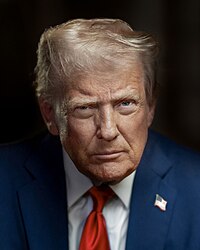
Russian Foreign Minister Sergei Lavrov announced Moscow's readiness to engage in multilateral dialogue on regional issues, signaling a pivot to coalition-based diplomacy as Donald Trump's negotiating latitude on Ukraine narrows following Democrats' unexpected congressional sweep. The shift comes as Trump's back-channel diplomacy with Ukrainian and Russian delegations has produced a limited ceasefire in Kherson, but Democratic control of Congress threatens to constrain unilateral executive action on settlement terms. Lavrov's proposal for a "3+3" Transcaucasia framework—involving Russia, Turkey, and Iran alongside Azerbaijan, Georgia, and Armenia—suggests Moscow is preparing parallel diplomatic tracks independent of US mediation.
Lavrov's comments, reported by TASS on November 2, framed Western capitals as unprepared for serious negotiation and accused the US of pursuing escalation rhetoric rather than dialogue. The Foreign Minister's emphasis on multilateral engagement reflects a deliberate repositioning: if Trump cannot deliver a comprehensive Ukraine settlement due to congressional opposition, Russia appears willing to deepen its alignment with regional powers to offset Western pressure. Moscow has spent the past six months testing US willingness to negotiate; the Democratic midterm victory signals that window may be closing on terms favorable to the Kremlin.
Trump's back-channel engagement—validated by a Kherson ceasefire that enabled humanitarian access and civilian return—had appeared to offer Russia a credible exit pathway. But Democrats' control of the Senate and House, achieved through unexpected wins in Maine, Kansas, Iowa, and Texas, substantially raises the political cost of any settlement that Moscow regards as acceptable. According to Politico reporting on November 1, European capitals are now closely monitoring whether Trump can sustain diplomatic momentum against Democratic pressure for continued military support to Ukraine.
To be sure, Trump administration officials maintain that diplomatic channels remain active and that the Kherson ceasefire demonstrates concrete progress on humanitarian grounds rather than capitulation. Yet the structural constraint is clear: any comprehensive settlement Trump negotiates will face Democratic legislative scrutiny, adding friction to a process that has already moved slowly. This asymmetry—where Russia can commit to multilateral frameworks independently of US politics, but Trump must navigate domestic opposition—reshapes the calculus of who holds negotiating patience.
Lavrov's multilateral framing also signals a potential recalibration of Russian strategic priorities away from bilateral US engagement toward coalition-building in Central Asia and the Caucasus. If Trump cannot deliver a Ukraine agreement within his current political window, Moscow's pivot to the 3+3 framework and closer Turkish-Iranian coordination suggests the Kremlin is preparing for prolonged competition rather than negotiated settlement. The result is that Russia's diplomatic optionality has widened precisely as Trump's has narrowed—a reversal from the alignment seen in Kherson ceasefire talks.
Silver and gold surged on the volatility signal: precious-metals traders interpreted congressional deadlock as a sign of prolonged geopolitical friction and reduced likelihood of near-term settlement. The market move reflects recognition that the Ukraine conflict may transition from an active negotiation phase back into a stabilized stalemate, extending rather than concluding the energy and commodity disruptions Moscow's invasion triggered.