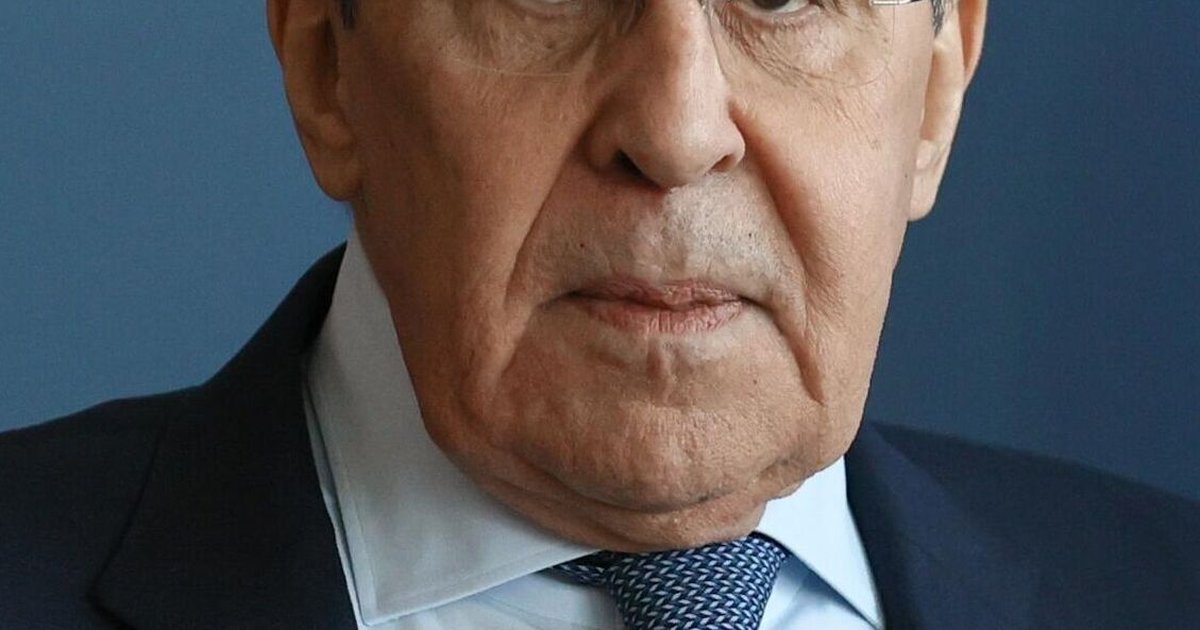
Indian Foreign Minister S. Jaishankar met Russian counterpart Sergey Lavrov in Atlanta on October 29 to discuss Ukraine and West Asia positioning, according to reporting by Nikkei Asia. The timing coincides with intensifying humanitarian crisis in Yemen, where a UN staffer died in Houthi custody this week and Saudi-coalition airstrikes injured three civilians in Hodeidah. The convergence signals Moscow's deepening interest in Yemen's conflict as a regional leverage point, and India's willingness to engage Russia on Middle East strategy despite formal non-alignment postures.
The Jaishankar-Lavrov meeting in Atlanta marks the highest-level India-Russia diplomatic engagement on West Asia since G20 deadlock over Ukraine language earlier this month. According to Reuters reporting on October 28, both foreign ministers discussed what Moscow frames as a coordinated approach to regional stability. The discussion extended beyond Ukraine to encompass Yemen's civil war and the broader Saudi-Iranian equilibrium—an unusual emphasis for New Delhi, which has historically maintained strict equidistance between Gulf actors. The meeting's focus on Yemen specifically suggests Russia is attempting to expand India's tacit acceptance of Russian engagement in Middle East proxy dynamics.
Yemen's humanitarian collapse has accelerated sharply in recent days, with the UN announcing a formal investigation into a staffer's death while in Houthi custody, first reported by Al Jazeera on October 29. Simultaneously, Saudi-coalition airstrikes struck Hodeidah's civilian areas, injuring three people according to the UN Office for the Coordination of Humanitarian Affairs. For its part, the Houthi movement has framed detention practices as security measures against espionage, a position rejected by UN officials and Western governments. These developments occur as Hamas leadership documentation surfaces in Gaza, indicating sustained operational capability despite military pressure—a signal Moscow is reading as evidence of proxy resilience in the region.
Russia's strategic calculus in Yemen has shifted markedly since 2022, when Moscow maintained largely observational neutrality in the Saudi-led coalition's war. Recent months have seen increased Russian diplomatic engagement with Houthi representatives in Muscat and Tehran, according to Defense News reporting from September. Moscow appears to view Yemen's conflict—and the Houthi movement specifically—as a potential counterweight to US-led Gulf alignment and a mechanism to complicate Western sanctions enforcement. India's engagement with Lavrov on this topic suggests New Delhi may be softening its historical resistance to treating Yemen as a multilateral negotiating issue rather than a Saudi-led coalition matter. The shift carries implications for India's balancing act between US strategic partnership and Russian economic cooperation.
The strategic significance lies not in any formal commitment but in the conversation itself. India's willingness to discuss Yemen policy with Russia—a departure from New Delhi's typical compartmentalization of regional disputes—signals that Moscow has gained enough regional credibility to be treated as a stakeholder in West Asia equilibrium management. This is emerging as a longer-term recalibration: India and Russia are exploring coordinated positioning on conflicts where neither actor has direct military involvement but both perceive opportunity in multipolarity. For the West, the conversation is a reminder that US-aligned actors like India remain responsive to Russian overtures on regional security architecture. The Houthi death investigation and continued civilian casualties will likely keep Yemen's humanitarian crisis visible enough to justify this level of diplomatic engagement in coming weeks.