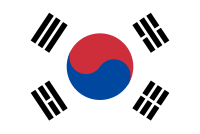
South Korea
SOUTH KOREA INTELLIGENCE DOSSIER
South Korea is a high-income East Asian nation-state and the world's 10th largest economy, commanding critical positions in semiconductor manufacturing, advanced defense systems, and digital infrastructure that underpin global technology supply chains. As the 51st-ranked entity on the LeadersCartel Power Index with a score of 2.6 out of 100, South Korea maintains asymmetric strategic importance disproportionate to its raw power ranking, driven by technological dominance rather than military or financial hegemony. The nation's geopolitical significance derives from its position as a democratic buffer state adjacent to North Korea, its alliance with the United States, and its role as a technological backbone for global commerce, making it a critical monitored asset across 1,087 active intelligence sources.
South Korea's placement in the monitored tier reflects its stable but constrained influence trajectory. The 4H/0E/0W signal distribution indicates four high-impact developments dominating surveillance attention with no emerging or watch-category concerns currently flagged. The entity's tier classification suggests neither ascending nor declining power dynamics but rather sustained tension between domestic stability and regional vulnerability. This positioning reflects Seoul's consistent challenge: extraordinary economic capability constrained by permanent security threats and demographic decline, creating a nation simultaneously too important to ignore and strategically boxed by geography and alliance structures.
Recent developments signal domestic legal enforcement and energy security anxieties. South Korea's prosecution of a 90-year-old woman for money laundering indicates sustained anti-financial crime operations maintaining institutional legitimacy, a low-level stability signal. More critically, Seoul's formal warnings regarding Hormuz Strait tensions demonstrate heightened energy vulnerability consciousness, as South Korea imports approximately 80 percent of its crude oil through this chokepoint. These signals reflect institutional responsiveness to supply-chain fragility rather than new threats, suggesting managed crisis awareness rather than systemic deterioration.
Analysts should monitor the next 72 hours for any escalation in Hormuz-related pricing movements affecting Korean energy costs and for secondary enforcement actions that might indicate broader financial crime investigations. The critical trigger event to watch is any statement from Seoul regarding Iranian sanctions compliance or Strait transit military positioning, which would signal shifting threat assessment and potential realignment with United States Middle East policy.