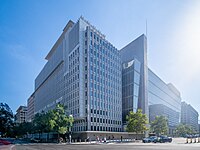
World Bank
INTELLIGENCE DOSSIER: WORLD BANK
The World Bank is a multilateral development institution headquartered in Washington DC, operating under US institutional influence and currently led by Ajay Banga. As the primary global mechanism for development financing and poverty alleviation, the World Bank deploys approximately $100 billion annually across 189 member states, making it a critical node in international economic governance and geopolitical leverage. Its strategic significance derives from deployment authority over development capital, policy conditionality mechanisms, and coordination functions that directly influence sovereign debt trajectories and macroeconomic policy in emerging markets.
World Bank maintains rank 39 on the LeadersCartel Power Index with a monitored tier classification and composite signal score of 8.8, representing stable institutional positioning tracked across 664 active intelligence sources. The signal distribution shows three high-impact signals, three emerging indicators, and zero watch-level flags, suggesting sustained but non-escalating visibility. This positioning reflects the organization's enduring structural power rather than acute geopolitical volatility. Stability across source networks indicates consolidated institutional status without immediate disruption signals, though the monitored tier suggests ongoing analytical surveillance for policy shift indicators.
Recent headline activity centers on two parallel crisis narratives. First, IMF warnings regarding worldwide fallout from escalating Saudi Arabia attacks signal coordination breakdown in global financial institution consensus on Middle East stability and oil price volatility management. Simultaneously, Bangkok protest movements explicitly targeting both IMF and World Bank over destructive capitalist framework implementation indicate legitimacy erosion in developing regions, particularly Southeast Asia. These signals suggest structural stress on institutional consensus mechanisms despite formal power concentration.
Analysts should monitor three vectors over 48-72 hours: Trump administration personnel appointments to World Bank board positions (potential policy realignment), Modi government coordination with World Bank on India-specific development lending (regional power dynamics), and expansion of Bangkok-origin protest movement to other Southeast Asian capitals. Primary trigger event: any announcement of World Bank policy framework revisions responding to anti-capitalist pressure would signal institutional response to legitimacy challenges and warrant immediate assessment of IMF-World Bank coordination status.