A South Korean court sentenced ex-President Yoon Suk Yeol to 30 years imprisonment on Wednesday for his declaration of martial law and involvement in a North Korean drone incident, according to multiple outlets. The conviction marks the deepest institutional fracture in Seoul in a decade, occurring as China consolidates military partnerships with North Korea and the US reassesses allied stability across the Indo-Pacific. The timing coincides with renewed questions about the credibility of South Korean command authority during a period of elevated regional tension.
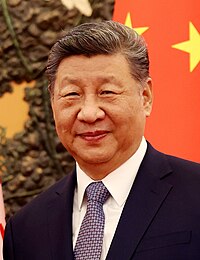
The sentencing exposes a structural vulnerability in US alliance architecture at a moment when Beijing and Pyongyang are actively deepening their military partnership. According to Reuters reporting on June 11, the court found Yoon liable for abuse of power and sedition—charges that underscore domestic political instability rather than external security threats. Yet the conviction arrives as Xi Jinping's summit with North Korean leadership solidifies a strategic alignment that directly challenges US deterrence posture on the peninsula. For Seoul, the loss of executive continuity during this window signals weakened decision-making capacity precisely when alliance cohesion matters most to Washington.
Yoon's legal jeopardy has accelerated questions about the legitimacy of South Korean defense policy. Nikkei Asia reported that the sentencing has forced the current administration into a defensive posture on military readiness, with parliamentary oversight now scrutinizing defense commitments that were previously aligned with White House strategy. The conviction also reopens debates about the 2023 drone incident itself—a breach that signaled North Korean willingness to test Seoul's air defenses. This institutional distraction compounds the strategic problem: while South Korea's political system processes internal accountability, North Korea benefits from the breathing room created by Seoul's domestic turmoil.
To be sure, South Korean officials have framed the military interventions as necessary responses to what they characterize as institutional breakdown and security threats requiring executive action. The defence ministry has maintained that command structures remain operationally sound despite the legal proceedings. However, the conviction's timing aligns with broader patterns in the region: Bangladesh's diplomatic pivot toward Malaysia and China in its first ministerial tour signals weakening Indian regional influence, while Ukraine's accelerated EU membership talks and expanded foreign fighter recruitment suggest that alliance mobility is shifting faster than institutional structures can absorb. The second-order effect is geopolitical repositioning—not immediate military escalation, but a reordering of allied confidence in each other's staying power.
The strategic consequence is that US negotiating leverage in Northeast Asia has narrowed. Washington now faces a Seoul government whose executive authority is legally compromised and politically fractured, at the exact moment Beijing is consolidating its North Korean alignment. A weakened South Korea is a weaker pillar in the US forward-deployed architecture. This does not immediately alter military balance—South Korean forces remain operational and NATO-aligned infrastructure in the region remains intact. But it does reduce the US capacity to execute coordinated responses to cascading crises. The Indo-Pacific realignment that began with Bangladesh's diplomatic shift and Ukraine's institutional acceleration now extends into the heart of the US-Japan-South Korea triad.